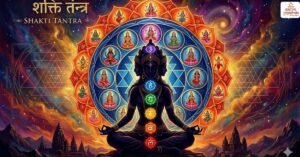
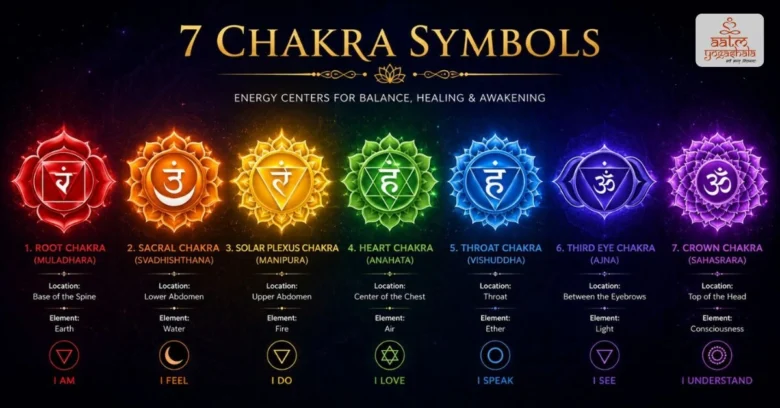
The ancient yogic tradition teaches that the human body is more than muscles, bones, and organs—it is also an energetic system. At the center of this subtle body are the 7 Chakra Symbols, each representing a unique energy center that influences our physical, emotional, mental, and spiritual well-being.
Today, millions of yoga practitioners, meditation enthusiasts, and holistic wellness seekers explore the 7 Chakra Symbols to deepen their self-awareness and improve their quality of life. At Aatm Yogashala, we believe understanding the symbolism behind each chakra helps students develop a more mindful yoga practice while connecting deeply with traditional yogic wisdom taught in Rishikesh.
Whether you’re beginning your yoga journey or enrolling in a 100 Hour YTTC in Rishikesh, understanding chakra symbolism forms an essential foundation for both personal growth and professional yoga teaching.
What Are Chakra Symbols?
The word Chakra comes from the Sanskrit word meaning “wheel” or “disc.” In yogic philosophy, chakras are spinning wheels of life force energy (Prana) located along the spine.
Each of the 7 Chakra Symbols consists of sacred geometric shapes, lotus petals, colors, seed mantras (Bija Mantras), and symbolic animals. These symbols are far more than artistic illustrations—they serve as meditation tools designed to awaken higher consciousness.
Ancient yogic scriptures describe chakras as pathways through which energy flows throughout the body. When these energy centers remain balanced, practitioners often experience improved emotional stability, mental clarity, spiritual awareness, and inner harmony.
Understanding the 7 Chakra Symbols
1. Root Chakra (Muladhara)
- Location: Base of the Spine
- Color: Red
- Lotus Petals: Four
- Element: Earth
- Seed Mantra: LAM
- Sacred Shape: Square inside a Four-Petaled Lotus
The Root Chakra (Muladhara) is the first of the 7 Chakra Symbols and forms the foundation of the body’s entire energy system. Located at the base of the spine, it is associated with feelings of safety, stability, grounding, and survival. In yogic philosophy, a balanced Root Chakra creates a strong connection between the individual and the Earth, helping establish emotional security and physical vitality.
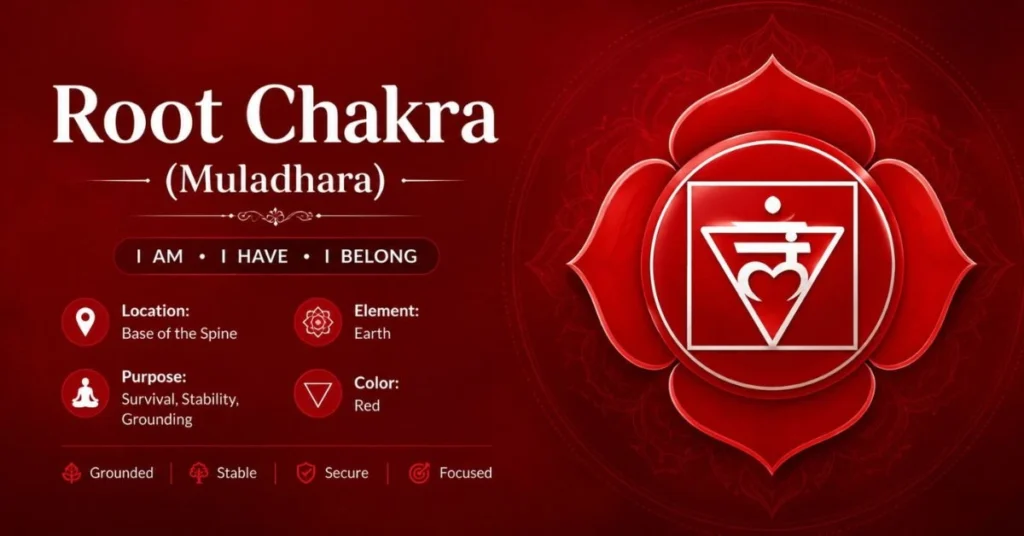
Its symbol features a square enclosed within a four-petaled lotus. The square represents strength, stability, and a solid foundation, while the four lotus petals symbolize the four fundamental aspects of human consciousness. The vibrant red color reflects life force, courage, and physical energy, while the Earth element signifies steadiness and resilience.
When the Root Chakra is balanced, individuals often experience greater confidence, emotional stability, financial security, physical strength, and a deep sense of belonging. However, an imbalance may lead to anxiety, fear, insecurity, or feelings of being disconnected. Practicing grounding yoga poses such as Mountain Pose (Tadasana), Malasana (Garland Pose), and Warrior I (Virabhadrasana I), along with chanting the LAM mantra, can help restore balance to this chakra.
2. Sacral Chakra (Svadhisthana)
- Location: Lower Abdomen
- Color: Orange
- Lotus Petals: Six
- Element: Water
- Seed Mantra: VAM
- Sacred Shape: Crescent Moon
The Sacral Chakra (Svadhisthana) is the second of the 7 Chakra Symbols and represents creativity, emotions, relationships, and personal expression. Situated in the lower abdomen, it governs emotional well-being, pleasure, passion, and reproductive energy.
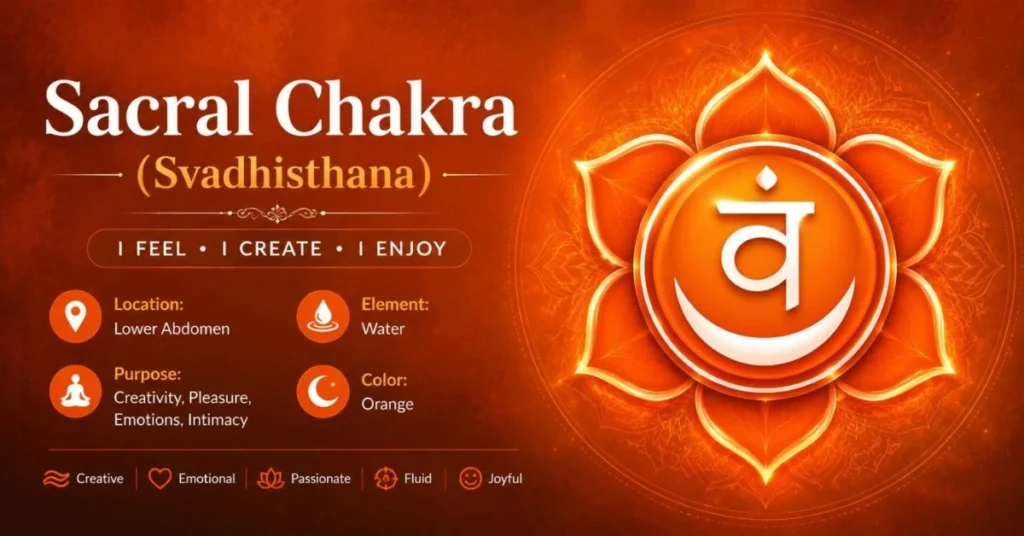
Its sacred symbol features a crescent moon inside a six-petaled lotus, symbolizing the fluid and ever-changing nature of emotions. The Water element represents adaptability, movement, and emotional flow, while the bright orange color signifies enthusiasm, creativity, and joy.
A balanced Sacral Chakra encourages healthy relationships, emotional intelligence, confidence, artistic expression, and openness to life’s experiences. Conversely, blockages in this chakra may result in emotional instability, creative blocks, fear of intimacy, or difficulty expressing feelings. Hip-opening yoga poses such as Bound Angle Pose (Baddha Konasana), Pigeon Pose, and Goddess Pose, combined with chanting the VAM mantra, help awaken and balance this energy center.
3. Solar Plexus Chakra (Manipura)
- Location: Upper Abdomen
- Color: Yellow
- Lotus Petals: Ten
- Element: Fire
- Seed Mantra: RAM
- Sacred Shape: Downward Triangle
The Solar Plexus Chakra (Manipura) is the third of the 7 Chakra Symbols and serves as the center of personal power, confidence, motivation, and self-discipline. Located around the navel, this chakra fuels ambition, determination, and inner strength.
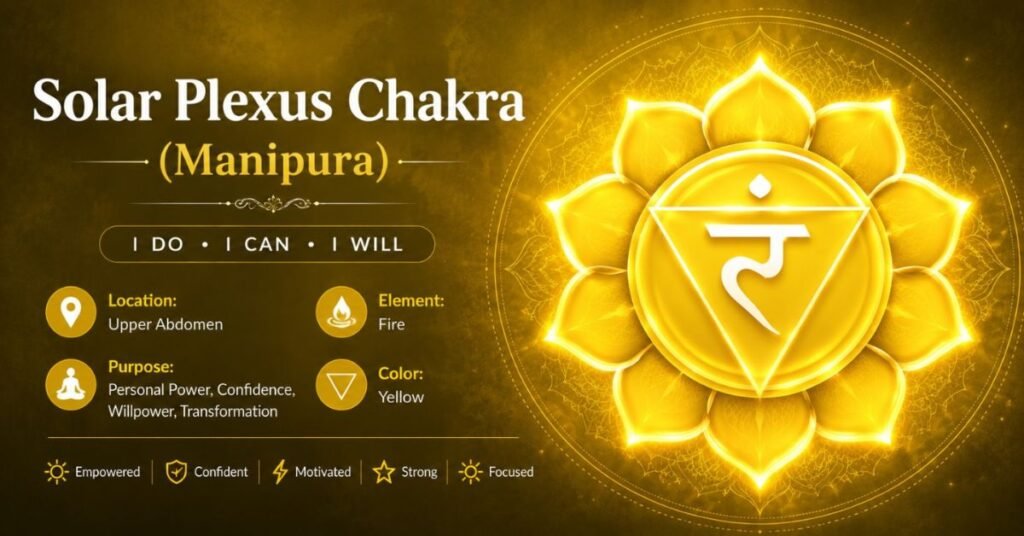
Its symbol contains a downward-facing triangle within a ten-petaled lotus, representing the transformative power of fire. The Fire element reflects energy, vitality, and personal transformation, while the bright yellow color symbolizes optimism, intelligence, and confidence.
4. Heart Chakra (Anahata)
- Location: Center of the Chest
- Color: Green
- Lotus Petals: Twelve
- Element: Air
- Seed Mantra: YAM
- Sacred Shape: Two Interlocking Triangles (Hexagram)
The Heart Chakra (Anahata) is the fourth of the 7 Chakra Symbols and serves as the bridge between the lower physical chakras and the higher spiritual chakras. It represents unconditional love, compassion, forgiveness, kindness, empathy, and emotional healing.
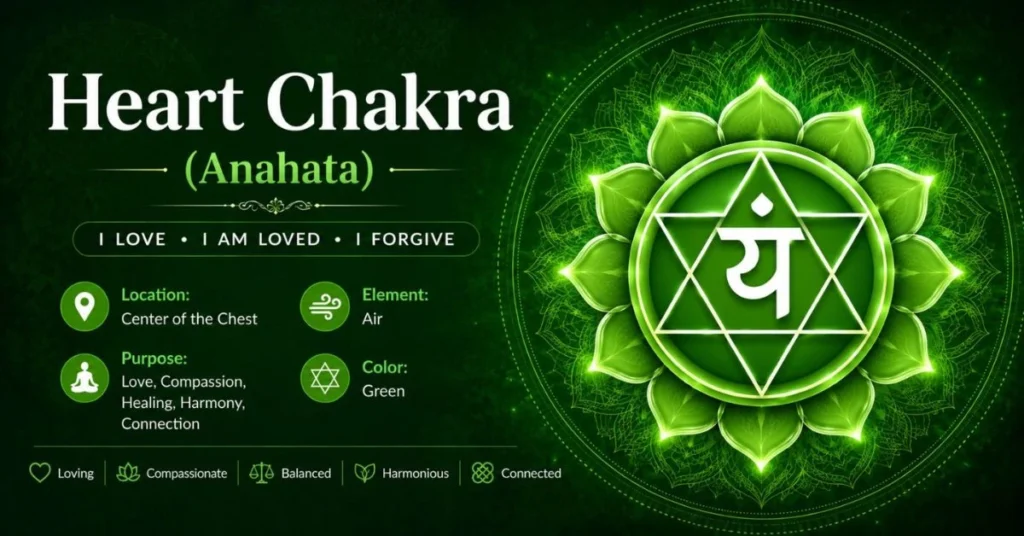
Its symbol features two interlocking triangles, forming a hexagram that represents the union of masculine and feminine energies, heaven and earth, and body and spirit. The green color symbolizes renewal, harmony, and growth, while the Air element reflects openness, freedom, and expansion.
5. Throat Chakra (Vishuddha)
- Location: Throat
- Color: Blue
- Lotus Petals: Sixteen
- Element: Ether (Space)
- Seed Mantra: HAM
- Sacred Shape: Circle within a Triangle
The Throat Chakra (Vishuddha) is the fifth of the 7 Chakra Symbols and governs communication, truth, honesty, and authentic self-expression. Located at the throat, it enables individuals to express thoughts, emotions, and ideas with confidence and clarity.
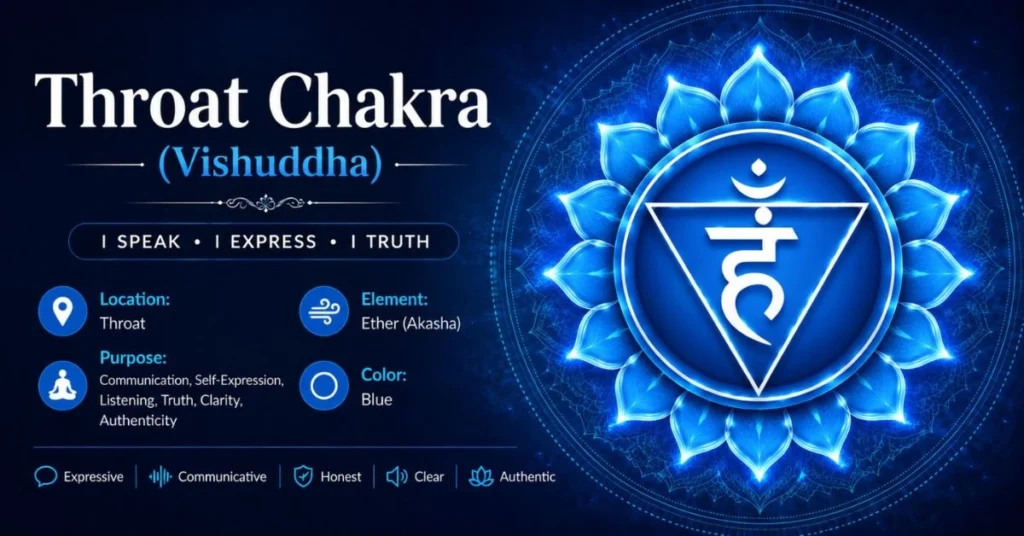
Its symbol contains a circle enclosed within a downward triangle and surrounded by sixteen lotus petals, representing purity, openness, and limitless communication. The blue color signifies wisdom and calmness, while the Ether element symbolizes infinite space and higher awareness.
6. Third Eye Chakra (Ajna)
- Location: Between the Eyebrows
- Color: Indigo
- Lotus Petals: Two
- Element: Mind (Light)
- Seed Mantra: OM
- Sacred Shape: Inverted Triangle
The Third Eye Chakra (Ajna) is the sixth of the 7 Chakra Symbols and represents intuition, perception, wisdom, imagination, and higher consciousness. Located between the eyebrows, it is often referred to as the seat of intuition.
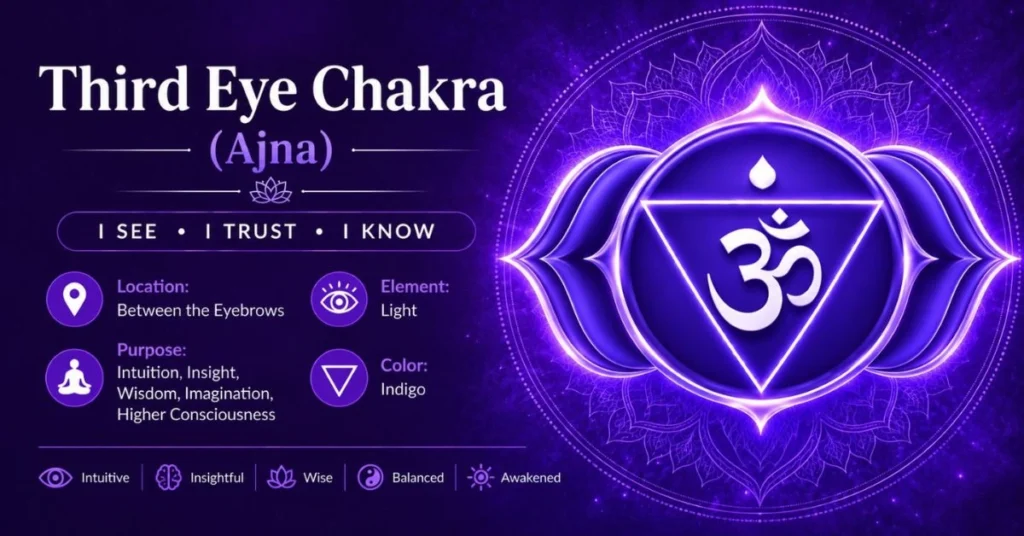
A balanced Third Eye Chakra enhances intuition, concentration, creativity, mental clarity, emotional intelligence, and decision-making abilities. When blocked, individuals may experience confusion, lack of focus, poor judgment, or limited imagination. Meditation, mindfulness
7. Crown Chakra (Sahasrara)
- Location: Top of the Head
- Color: Violet or White
- Lotus Petals: One Thousand
- Element: Universal Consciousness
- Seed Mantra: Silence or OM
- Sacred Shape: Thousand-Petaled Lotus
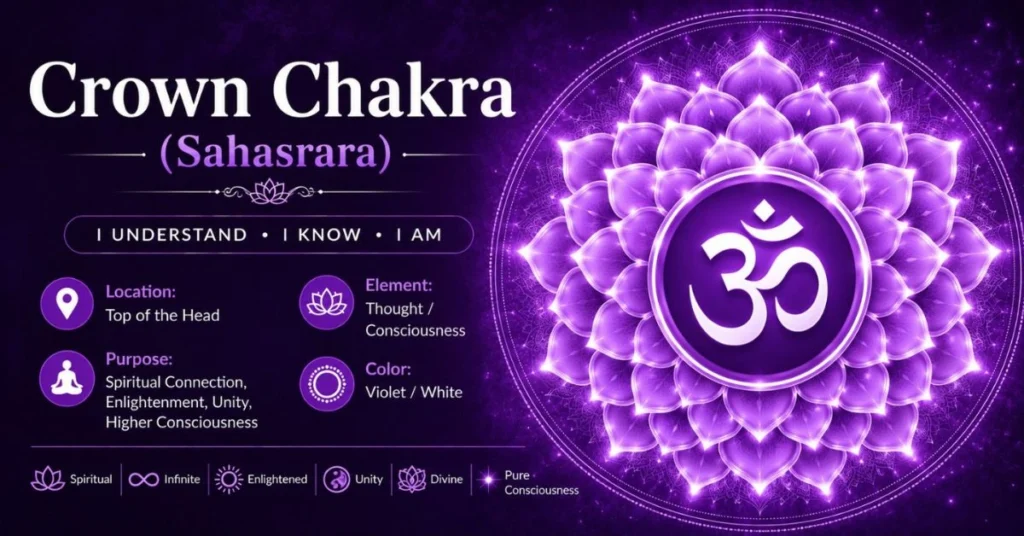
Its sacred symbol is the magnificent thousand-petaled lotus, symbolizing infinite consciousness, spiritual awakening, and limitless potential. The violet or white color reflects purity, peace, and divine energy.
The Crown Chakra (Sahasrara) is the seventh and highest of the 7 Chakra Symbols, representing spiritual enlightenment, divine consciousness, wisdom, and the ultimate connection with the universe. Located at the crown of the head, it is considered the gateway to higher awareness and self-realization.
Why are Chakra Symbols Important in Yoga?
Understanding chakra symbols allows yoga practitioners to connect physical postures with energetic awareness.
Benefits include:
- Better meditation practice
- Improved concentration
- Enhanced emotional balance
- Deeper breathing awareness
- Greater spiritual connection
- Mind-body alignment
- Increased mindfulness during yoga practice
Students enrolled in 200 Hour Yoga Teacher Training in Rishikesh and 500 Hour Yoga Teacher Training in Rishikesh often study chakra philosophy alongside yoga anatomy, meditation, pranayama, and traditional yogic texts to develop a complete understanding of holistic wellness.
How Yoga Helps Balance the 7 Chakras?
Yoga combines physical movement, breath control, meditation, and mindfulness, making it one of the most effective practices for balancing chakras naturally.
A regular yoga routine may help:
- Improve energy flow
- Reduce stress
- Enhance emotional well-being
- Increase flexibility
- Improve breathing capacity
- Strengthen mind-body awareness
At Aatm Yogashala, chakra awareness is integrated into traditional Hatha Yoga, Ashtanga Yoga, pranayama, meditation, and philosophy classes, allowing students to experience yoga beyond physical postures.
Why Choose Aatm Yogashala to Study Chakras?
Aatm Yogashala is a Yoga Alliance-registered yoga school in Rishikesh offering traditional multi-style yoga education, including Hatha, Ashtanga, Iyengar, meditation, pranayama, yoga philosophy, anatomy, and teaching methodology. The school is led by experienced teachers and emphasizes authentic yogic learning in the spiritual setting of Rishikesh.
Students receive a balanced education that combines ancient wisdom with structured teacher training, making chakra studies practical rather than purely theoretical.
Conclusion
The 7 Chakra Symbols are much more than beautiful spiritual designs—they are timeless representations of consciousness, healing, and personal transformation. Each symbol reflects a unique aspect of human energy, encouraging balance between the body, mind, and spirit.
By learning the meanings, sacred geometry, colors, and healing energies of each chakra, you can enrich your yoga practice, deepen your meditation, and cultivate lasting inner harmony. Whether you are beginning your yogic path or advancing through teacher training, understanding the chakra system provides a strong foundation for holistic growth.
If you wish to experience authentic chakra meditation and traditional yogic teachings, Aatm Yogashala in Rishikesh offers an ideal environment to explore these ancient practices under experienced guidance.
Commonly Asked Questions
Q. What are the 7 Chakra Symbols?
A. The 7 Chakra Symbols are sacred geometric representations of the body’s seven primary energy centers in yogic philosophy. Each symbol includes a lotus, geometric shapes, colors, elements, and a seed mantra that reflects the chakra’s unique qualities and healing energy.
Q. What is the meaning of the 7 Chakra Symbols?
A. The meaning of the 7 Chakra Symbols lies in their representation of different aspects of physical, emotional, mental, and spiritual well-being. From the Root Chakra, which symbolizes stability, to the Crown Chakra, which represents enlightenment, each symbol guides practitioners toward balance and self-awareness.
Q. How can beginners learn about the 7 Chakra Symbols?
A. Beginners can learn about the 7 Chakra Symbols through authentic yoga schools, meditation classes, yoga philosophy studies, guided chakra meditations, and Yoga Teacher Training courses. Understanding the symbols alongside practical yoga and pranayama helps build a strong foundation in yogic philosophy.
Q. What is the best way to activate the 7 Chakras naturally?
A. The most effective way to activate the 7 Chakras naturally is by combining yoga asanas, pranayama, meditation, Bija Mantra chanting, mindfulness, healthy lifestyle habits, and regular self-reflection. Consistent practice helps maintain balanced energy throughout the body.
Q. Where can I study chakra philosophy in Rishikesh?
A. If you want to explore the 7 Chakra Symbols in depth, Aatm Yogashala offers authentic Yoga Teacher Training programs in Rishikesh that include yoga philosophy, meditation, pranayama, chakra awareness, and traditional yogic teachings under experienced instructors.