
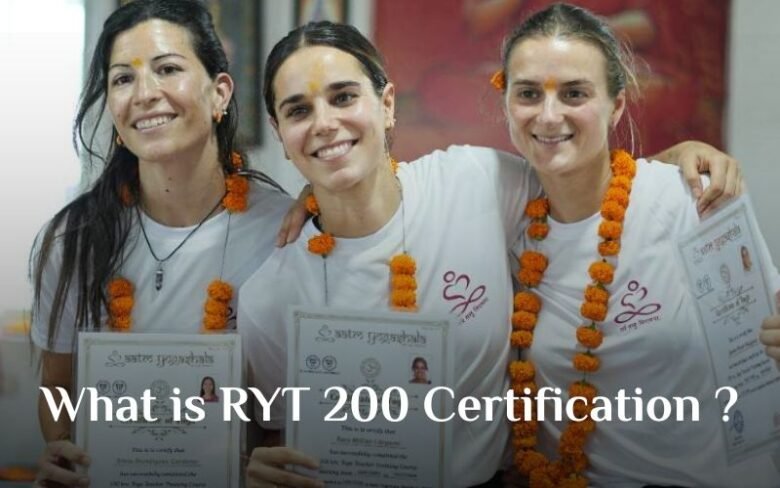
The credential RYT 200 stands for Registered Yoga Teacher 200 Hours. It is an international qualification administered by Yoga Alliance, the largest non-profit registry for yoga instructors globally. Earning this designation verifies an instructor graduated from an accredited institution whose syllabus meets established criteria across postural alignment, anatomy, philosophy, and teaching methodology.
If you plan to teach group classes, work with private clients, or purchase instructor liability insurance, the RYT 200 credential serves as your recognized baseline. It shows studio managers and fitness directors that your instruction follows standardized safety guidelines and professional ethics.
At AATM Yogashala in Rishikesh, we guide international students through these precise curriculum benchmarks every month. This guide explains what the RYT 200 credential means, how Yoga Alliance registration works, syllabus hours required, administrative fees involved, and how this registration translates into an international teaching career.
Quick Overview: Key Takeaways
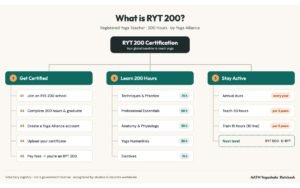
- Registry Status, Not a Degree: Yoga Alliance is a voluntary registry, not a government licensing bureau. An RYT 200 listing shows you completed 200 certified training hours at an approved school.
- The Industry Baseline: Commercial studios, gyms, and insurers treat RYT 200 as the foundational requirement to teach public classes safely.
- Elevated Curriculum Standards: The 200 hours are divided into Techniques, Training & Practice (75 hours), Anatomy & Physiology (30 hours), Yoga Humanities (30 hours), Professional Essentials (50 hours), and electives (15 hours).
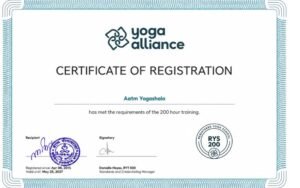
- School Accreditation Requirement: You can only register as an RYT 200 if you graduate from a Registered Yoga School (RYS 200) like AATM Yogashala.
- Triennial Renewal: Maintaining active RYT status requires paying annual registry dues, logging 30 hours of teaching experience, and submitting 16 continuing education units every three years.
What Does RYT 200 Actually Mean? (Deconstructing the Designation)
To understand what is ryt 200 certification, you must separate your school diploma from your directory registration. Beginners often confuse the completion certificate awarded by an ashram with the registry profile maintained by Yoga Alliance.
Here is the operational distinction:
- The School Diploma: When you finish a 200-hour course, your school awards a graduation diploma. That certificate confirms you completed the syllabus hours, passed written evaluations, and completed practical teaching clinics.
- The RYT Credential: After graduating, you submit your school certificate to Yoga Alliance. Once verified and dues are paid, your name appears on the global directory, authorizing you to use the title “RYT 200.”
RYT vs. RYS: Understanding the Difference
Yoga credentialing relies on two distinct designations:
- RYS (Registered Yoga School): An institution whose syllabus, lead trainers, and instructional facilities have been vetted and registered by Yoga Alliance. Designations include RYS 200, RYS 300, and RYS 500. AATM Yogashala is an accredited RYS located in Rishikesh, India.
- RYT (Registered Yoga Teacher): An individual instructor who completed an accredited program at an RYS and maintains an active profile on the Yoga Alliance registry.
An individual cannot register as an RYT without a graduation diploma from an RYS. Completing a course at an unregistered studio leaves you ineligible for RYT status, regardless of your teacher’s background.
Is Yoga Alliance a Government Regulatory Body?
No. Yoga Alliance holds no statutory legal authority. Yoga remains an unregulated field in most jurisdictions, meaning national governments do not issue teaching licenses for yoga instruction.
However, Yoga Alliance serves as the recognized self-regulatory benchmark for the wellness industry. Studio owners, corporate health programs, and insurance underwriters structure their hiring requirements around Yoga Alliance guidelines. Without an RYT credential or a diploma from an accredited RYS, securing studio employment or liability coverage is difficult.
Yoga Alliance Elevated Standards: The Official 200-Hour Syllabus Breakdown
In February 2020, Yoga Alliance enacted the Elevated Standards across all accredited institutions. This policy update established core competencies and required lead trainers to deliver at least 150 of the 200 total hours in person.
Under these standards, every accredited 200-hour program must deliver a minimum of 200 curriculum hours distributed across four mandatory educational categories.
| Educational Category | Minimum Hours | Core Subjects & Competencies Covered |
| Techniques, Training & Practice (TTP) | 75 Hours | Asana alignment, biomechanics, pranayama breathwork, meditation methods, kriyas, and chanting. |
| Anatomy & Physiology (AP) | 30 Hours | Musculoskeletal anatomy, joint kinematics, fascia lines, spine mechanics, nervous system regulation, and contraindications. |
| Yoga Humanities (YH) | 30 Hours | History of yoga, Patanjali’s Yoga Sutras, Bhagavad Gita philosophy, ethics for teachers, and cultural context. |
| Professional Essentials (PE) | 50 Hours | Sequencing logic, verbal cueing, hands-on adjustments, class management, practicum teaching, and business ethics. |
| Elective / Integrative Hours | 15 Hours | School specializations, Ayurveda principles, sound healing immersion, or postural clinics. |
| Total Program Requirement | 200 Hours | Complete foundational training for public instruction |
1. Techniques, Training & Practice (75 Hours Minimum)
This category forms the movement foundation of your training. Rather than practicing postures as generic exercise, you analyze the mechanical architecture of each posture across classical Hatha and Ashtanga Vinyasa disciplines:
Asana Alignment: Analyzing standing poses, hip openers, backbends, twists, forward folds, and inversions. Trainees examine bone compression versus muscular tension to understand why individual bone structures govern movement boundaries.
Pranayama (Breath Control): Mastering diaphragmatic breathing, Nadi Shodhana, Kapalabhati, Bhastrika, and Ujjayi breath.
Shatkarma (Yogic Cleansing): Practicing purification kriyas, including Jala Neti nasal irrigation to clear airways before morning meditation.Meditation (Dhyana): Learning systematic concentration techniques (Dharana) leading into silent breath awareness.
To understand how traditional lineages organize these movement systems, read our analysis of the different schools of yoga.
2. Anatomy & Physiology (30 Hours Minimum)
Modern studio teaching demands biological literacy. Anatomy modules connect classical postures to modern movement mechanics so instructors can protect students from joint strain:
- Skeletal Variations: Examining pelvic morphology, femoral angles, and spinal curves. Instructors explain how structural bone differences dictate rotation.
- Functional Biomechanics: Analyzing muscle groups as agonists, antagonists, and stabilizers. Trainees study reciprocal inhibition, learning how contracting quadriceps allows hamstrings to lengthen safely during forward bends.
- Spine Mechanics: Evaluating safe axial extension, rotation, and flexion. Students learn how rounding the lumbar spine under load stresses the L4-L5 and L5-S1 intervertebral discs.
- Autonomic Regulation: Understanding how slow, measured exhalations stimulate the vagus nerve, down-regulating sympathetic stress responses into parasympathetic states.
3. Yoga Humanities (30 Hours Minimum)
Yoga developed as an internal psychological discipline, not gymnastics. The Yoga Humanities category ensures graduates understand philosophical texts and historical traditions:
- Patanjali’s Yoga Sutras: Studying the eight limbs of Raja Yoga, beginning with universal ethical restraints (Yamas) and personal observances (Niyamas).
- The Bhagavad Gita: Analyzing Karma Yoga (action without attachment to results), Jnana Yoga (discernment), and Bhakti Yoga (devotion) applied to modern professional life.
- Teacher Ethics: Examining student-teacher boundaries, consent protocols in physical adjustments, inclusive communication, and anti-harassment standards.
4. Professional Essentials (50 Hours Minimum)
The Professional Essentials category turns a dedicated practitioner into an articulate teacher through practical class design, vocal delivery, and live practicum assessments:
- Sequencing Architecture: Designing peak-pose sequences that warm targeted muscle groups before demanding holds, followed by neutralizers and cool-downs.
- Verbal Cueing: Learning concise anatomical language. Trainees replace vague metaphors with direct instructions such as “ground down through the ball of the big toe” or “draw the lower belly inward on your exhale.”
- Hands-On Adjustments: Learning physical assists that stabilize joints without pushing students past their anatomical end-range.
- Practicum Teaching: Every trainee leads live peer classes under direct faculty observation. Lead instructors provide feedback on vocal projection, pacing, room positioning, and adjustment safety.
If you want a preview of how these modules unfold week by week in an ashram, explore our breakdown of what to expect in yoga teacher training.
What Does an RYT 200 Credential Actually Qualify You to Do?
Graduating from an RYS 200 program and registering your RYT 200 credential gives you concrete privileges across the wellness industry:
- Teach Public Group Classes: Commercial studios, boutique gyms, and health clubs require RYT 200 credentials during teacher auditions.
- Instruct Private Clients: You possess the alignment knowledge to design customized one-on-one sessions addressing individual mobility restrictions.
- Secure Professional Liability Insurance: Insurance brokers like BeYogi, Alternative Balance, and Westminster Insurance require a verified 200-hour certificate from an accredited RYS before issuing a policy.
- Lead Corporate Wellness Programs: Corporate human resources departments require credentials before booking instructors for workplace wellness sessions.
- Qualify for Advanced YTT: An accredited 200-hour certificate serves as the mandatory prerequisite to enroll in advanced 300-hour teacher training programs.
Boundaries of Your Scope of Practice
Professional integrity requires recognizing your educational limits. An RYT 200 credential does not grant medical authority:
- You are not a physical therapist or medical clinician. You cannot diagnose injuries or prescribe yoga as a medical treatment.
- You cannot lead your own registered teacher training school. To train and certify new teachers under Yoga Alliance, an instructor must hold advanced credentials (such as E-RYT 500) and register as an RYS.
- You are not qualified to offer clinical trauma therapy or high-risk prenatal interventions without specialized supplementary training.
Step-by-Step: How to Obtain and Register Your RYT 200 Credential
Navigating the registration path involves five specific administrative steps:
Step 1: Enroll in a Registered Yoga School (RYS 200)
Verify that your chosen school holds active RYS 200 accreditation on the Yoga Alliance online directory. Completing a residential immersion such as the Yoga Alliance certified 200-hour yoga teacher training in Rishikesh at AATM Yogashala ensures every contact hour adheres strictly to the Elevated Standards.
Step 2: Complete the 200 Hours and Graduate
Attend mandatory lecture blocks, complete assignments on anatomy and philosophy, participate in teaching practicums, and pass practical evaluations. Upon graduation, the school issues your certificate displaying your lead trainer’s credentials and the school’s RYS registry ID.
Step 3: Create a Teacher Account on Yoga Alliance
Navigate to yogaalliance.org, select Teachers from the menu, and click Join Yoga Alliance to create your user profile.
Step 4: Submit Training Details and Upload Certificate
Within your dashboard, select Add Training Program and search for your school name (e.g., *AATM Yogashala*). Enter course dates and upload a clean copy of your certificate. Yoga Alliance then notifies your school to verify your graduation.
Step 5: Pay the Yoga Alliance Registration Fees
Once your school confirms graduation in the portal, finalize your listing by paying the registry fees:
- One-Time Application Fee: $50 USD
- Annual Teacher Registration Dues: $65 USD
- Total First-Year Investment: $115 USD
Subsequent renewal costs $65 USD annually to maintain your active directory listing and credential badge.
RYT 200 vs. RYT 500 vs. E-RYT 200: Understanding Progression Tiers
Yoga Alliance maintains several credential tiers based on cumulative training hours and verified post-graduation teaching experience.
| Credential Tier | Prerequisite Training | Required Teaching Hours | Primary Professional Role |
| RYT 200 | 200 hours from an RYS 200 | 0 teaching hours required | Entry-level instructor qualified for public, private, and gym classes. |
| RYT 500 | 200-hr TTC + 300-hr advanced TTC (from RYS 300/500) | 100 teaching hours post-graduation | Senior instructor specialized in advanced adjustments, sequencing, and anatomy. |
| E-RYT 200 *(Experienced)* | 200 hours from an RYS 200 | Minimum 1,000 teaching hours over at least 2 full years | Lead teacher qualified to serve as faculty in 200-hour training programs. |
| E-RYT 500 *(Master Lead)* | 500 hours total training | Minimum 2,000 teaching hours (at least 500 hours post-500-hr training) over 4 years | Master teacher authorized to lead 200, 300, and 500-hour certification programs as Lead Trainer. |
Once you accumulate two to three years of steady studio teaching after your RYT 200, completing an advanced 300-hour yoga teacher training in Rishikesh upgrades your status to RYT 500. For practitioners comparing course lengths, review our direct guide on 100-hour vs 200-hour vs 300-hour yoga teacher training.
How to Maintain and Renew Your RYT 200 Status
Holding an RYT 200 credential is not a permanent status. Yoga Alliance enforces three renewal criteria to ensure active instructors maintain current knowledge:
- Annual Registry Dues: Pay the annual $65 USD renewal fee. If dues lapse, your profile becomes inactive, and you lose the right to use official RYT marks.
- Triennial Teaching Hours: Log at least 30 hours of verified yoga teaching into your portal every three years. These include public group classes, private sessions, or corporate workshops.
- Continuing Education Units (CEUs): Log at least 16 hours of Yoga Alliance Continuing Education within the same three-year period. A minimum of 10 hours must be direct contact hours with a recognized provider (YACEP), while the remaining 6 hours can be completed through self-study or asynchronous courses.
In-Person Immersion vs. Online Courses: Does Format Affect Validity?
During 2020, Yoga Alliance introduced temporary online provisions allowing schools to train candidates remotely. While online certificates remain accepted by the registry, studio hiring directors evaluate online and in-person graduates through very different standards.
| Feature Comparison | Residential Ashram Immersion | Online Distance Learning |
| Daily Routine | 24 to 28 days of continuous practice in the Himalayas | Self-paced video modules between work and home tasks |
| Hands-On Adjustments | Practiced daily on peers under direct instructor guidance | Theoretical adjustments observed on a digital screen |
| Voice Projection | Practiced live across a spacious shala environment | Spoken into a computer microphone without room dynamics |
| Learning Environment | Total immersion away from workplace and digital distractions | Frequent domestic interruptions and routine stress |
| Studio Hiring Preference | Highly favored during practical teaching auditions | Frequently scrutinized or filtered out by studio managers |
Yoga instruction is a tactile, relational discipline. You cannot learn to correct a pelvic misalignment or support a student in an inversion through a flat computer monitor. In an ashram, you observe bodies of varying ages, flexibilities, and skeletal shapes every single day.
Studying in Rishikesh, the birthplace of yoga, places you inside a living spiritual tradition. The discipline of waking at 05:30 AM, practicing alongside the sacred Ganges, and absorbing philosophy from Indian masters builds teaching confidence that online videos cannot duplicate.
To evaluate costs before deciding, review our analysis on whether a 200-hour yoga teacher training in Rishikesh is worth it.
Frequently Asked Questions (FAQ)
1. Can I teach yoga immediately after graduating from an RYT 200 program?
Yes. Completing an accredited 200-hour program gives you the legal qualification, instructional methodology, and anatomical knowledge to lead beginner and intermediate yoga classes at studios, gyms, or private settings.
2. Is Yoga Alliance certification mandatory by law to teach yoga?
No government law mandates Yoga Alliance certification to teach. However, commercial studios, gyms, and professional liability insurance providers treat RYT 200 as their mandatory operational baseline.
3. How much does it cost to get RYT 200 certified in Rishikesh?
All-inclusive 200-hour residential teacher training at AATM Yogashala costs between $750 and $1,250 USD, covering tuition, private or shared accommodation, 3 sattvic meals daily, and study materials. Adding flights and the $115 Yoga Alliance registration fee totals approximately $1,600 to $2,600 USD.
4. Do I need to be flexible or advanced in asana to enroll in an RYT 200?
No. The 200-hour course is foundational, designed to build alignment and teaching skills from the ground up. Skeletal variations determine flexibility, and sincere dedication matters more than advanced postures.
5. What happens if I choose not to register with Yoga Alliance after graduating?
Registering is voluntary. You retain your school graduation diploma for life and can teach. However, you cannot use the official RYT 200 trademark title or appear on the international Yoga Alliance directory.
6. Can I take a 100-hour training and get an RYT 100 credential?
No. Yoga Alliance does not offer an RYT 100 credential. A 100-hour course serves as personal development or Semester 1 of a full 200-hour training. For details on how modular tiers function, read about our 100-hour yoga teacher training in Rishikesh.
7. Does an RYT 200 certificate expire?
Your school graduation diploma never expires. However, your active registration on the Yoga Alliance directory renews annually with $65 USD dues, plus logging 30 teaching hours and 16 continuing education hours every 3 years.
Launch Your Teaching Journey with Aatm Yogashala
Earning your RYT 200 certification represents a fundamental turning point in your relationship with yoga. It transforms a personal movement routine into an articulate, disciplined craft capable of serving others safely.
If you are ready to study under authentic Indian masters in the spiritual heart of Rishikesh:
- Explore our complete curriculum, faculty profiles, and upcoming batch dates for the Yoga Alliance certified 200-hour yoga teacher training in Rishikesh.
- Check room availability and reserve your seat by submitting our online reservation form.
- Have questions regarding syllabus prerequisites, visa guidelines, or travel logistics? Contact our admissions team for personal assistance.