
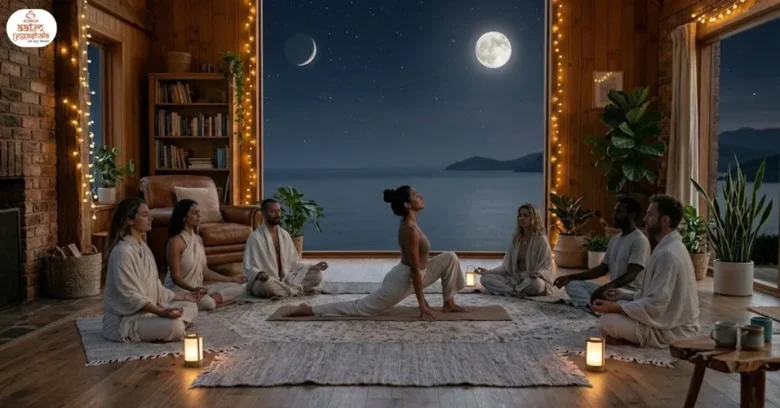
Moon cycles have been observed by our ancestors for a variety of reasons—such as planting seeds at the right time, performing rituals and ceremonies, and aligning activities with specific phases of the moon. Most indigenous and ancient cultures, believed that each phase of the moon represented a specific archetype, and developed rituals and customs aligned with it.
Each month, the new moon brings an invitation for growth and renewal. Astrologically, it sits behind the sun, making it invisible to us. In this process, the new moon heralds the start of a new lunar cycle, and it is usually accompanied by a variety of new beginnings.
No wonder so many individuals are unconsciously oriented towards this energy and are likely to develop new habits, fantasize about new projects, desire to create more, find time to engage in deep self-reflection, and set goals.
Full Moon Rituals: Must-Do’s
The following are the rituals that you should do during a full moon:-

1. Nourish with warm, grounding foods
Eat soft and easy-to-digest foods – consider steamed vegetables instead of rice, chia pudding, warm smoothies, nourishing shakes or light herbal broths. Avoid starving or restrictive dieting. It is a period of replenishing and not depriving.
2. Meditate on the Heart Chakra (Anahata)
Take your consciousness to the centre of your chest. Imagine a green or rose-colored light, a soft glow. Take in compassion, forgiveness, and openness with every breath.
3. Primordial sound mantra
The syllables of your birth Nakshatra sound have a healing vibration. Reciting your Primordial Sound Mantra on a Full Moon makes you more connected with the Moon and builds the mind. To find out your Moon, enter your place of birth in our Vedic Astrology Calculator, namely the nakshatra and pada you were born in, and choose the right mantra sound.
What Not to Do During a Full Moon?
The following are the things that you should not do during a full moon:-
1. Don’t Turn Down Opportunities Due to Fear
New opportunities are sometimes daunting, but the fear is only symbolic of an unknown land, which can be highly productive with potential. Fear can be a good sign of where the big growth can occur. When it feels good in some way, but you are in doubt, follow your gut, not the fear and jump.
2. Do Not Shy Away from Strong Conversations
Don’t feed into empty social media forums that have heated conversations. Rather, select interesting discussions that drive development and exploration. Fear not to open up to the possibility of sharing something that is vulnerable.
It’s amazing the connections that can be built from sharing an unspoken part of yourself. You should spend your time fruitfully with those you decide to converse with, and when the latter fails to agree with you, hear the other side of the story. Learn instead of fighting it.
3. Waste not your Time with Energy Suckers
It is a general NO (always), but it can not always be avoided. But, since the new moon is a particularly good energy to cut the cords, be sure to identify who in your life makes you feel uplifted, and who doesn’t. Separate the dirt and seeds, and make sure to concentrate on friendships that drive growth. In simple terms, do not allow others to kill your vibe.
4. Never Turn Down the Untold
Be receptive to messages, wisdom and healing in every form. The bright light that we normally desire is sometimes not what we really need. It can also be in the shadow, in the unknown, and the murky waters and emotions we try to avoid, and oftentimes it can be scary. But when we sit with that feeling, without making attempts to avoid, deflect or project, there may be deep awakenings in such moments.
Read Also:- Sound healing course in in Rishikesh
How to Make the Most of a New Moon?
A New Moon is the first stage of the monthly lunar cycle, when the Moon and the Sun are in a divine eclipse. This energy is strong; you may experience low vitality as energies of change and transformation boil up. Be gentle with yourself in the way you move, expend your energy, communicate or think, allowing time for ritual, meditation and relaxation during this New Moon phase.
The New Moon will assist you to resonate with its energy, as well as provide holistic practices in totality to connect more with the greater cosmos, to empower you to unfreeze patterns in your life that are no longer serving you and to inspire new beginnings, leaving you feeling rooted and nurtured.
Do’s for New Moon Yoga
The following are the things that you should do during a new moon:-
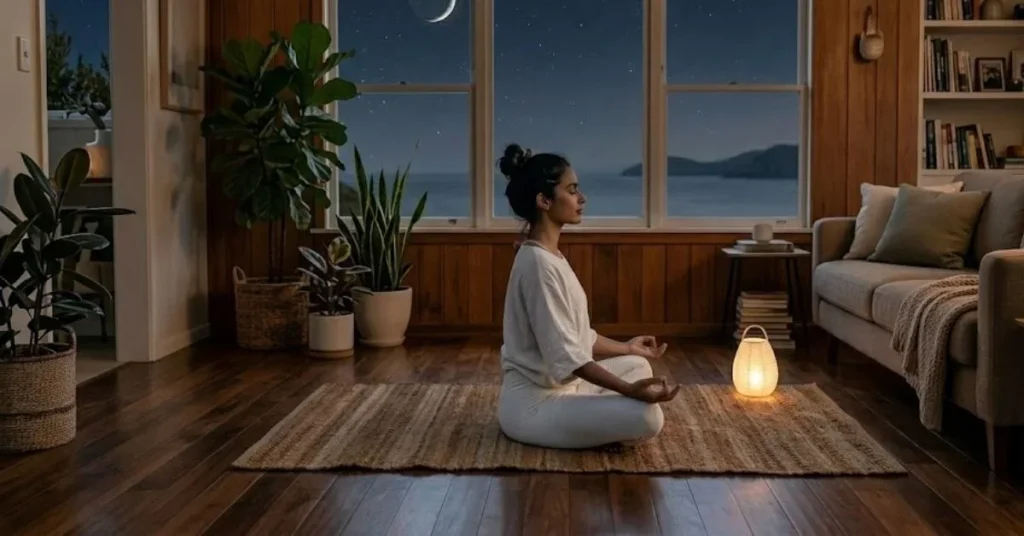
1. Focus on Gentle & Restorative Practices
During the New Moon, practice relaxing forms of Yin Yoga, Restorative Yoga, and Slow Hatha. These soft practices assist in compensating for the naturally low energy of this lunar phase and aid relaxation, inner calmness, and grounding.
2. Prioritize Breathwork (Pranayama)
The New Moon, in particular, is a time of inward-focused energy, and breathwork is particularly helpful. Nadi Shodhana and Bhramari Pranayama are some of the practices that assist in balancing the energy and calming the mind, respectively, as well as decreasing mental agitation.
3. Meditate & Set Intentions
The New Moon is a perfect period to meditate, be self-reflective, and make new intentions. Even ten to fifteen minutes of stillness can assist in the release of emotion, clarity of thought, and setting goals to be accomplished in the next cycle.
4. Practice Grounding Asanas
Grounding poses that bring you to the earth, including Child Pose (Balasana), forward folds and seated stretches. The asanas assist in balancing emotions, calming the mind, and developing a feeling of balance and serenity.
5. Hear Your Heart
During the New Moon, the energy levels can be lower, and it is essential to respect the needs of your body. Rest when necessary, lessen the intensity of your efforts, and move slowly with consciousness and ease.
Don’ts for New Moon Yoga
Below are the practices that you should avoid during the new moon:-
1. Do not take Intense or Power Yoga
High-intensity practices to avoid include Power Yoga, Hot Yoga, or very dynamic Vinyasa flows. The body and the mind react more to the mild movements during the New Moon as opposed to physically demanding sessions.
2. Don’t Push Your Limits
This is not the time to be ambitious and go into advanced poses, deep backbends, or long endurance holds. The excessive activity at this stage can result in exhaustion, pain, or even harm.
3. Avoid Overstimulating Breathwork
Avoid too vigorous breathing exercises, such as Kapalbhati Pranayama and Bhastrika Pranayama, since they can be over-stimulating when your body requires relaxation.
4. Do Not Sleepwalk
When you become emotional, withdrawn, or low on energy, have the New Moon phase as a normal part. Instead of attempting to suppress these feelings, practice with them by means of gentle movements and mindfulness.
5. Avoid Rigid Expectations
The New Moon may make your yoga practice slower, quieter, and less physical than normal, and that is nothing to be concerned about. Do not have strict expectations and learn to enjoy the healing power of this stage.
The Classical Ashtanga Moon Day Observance Rationale
In traditional Ashtanga yoga, both the Full Moon (Purnima) and New Moon (Amavasya) are non-practice rest days based on classical energetic principles:
• Full Moon (Purnima): Gravitational tidal forces elevate internal fluids and prana. Emotional excitability and joint hypermobility peak, significantly increasing risk of ligamentous micro-tears during vigorous asanas.
• New Moon (Amavasya): Energy contracts downward (Apana Vayu), inducing natural lethargy and diminished core muscle tone. Forcing dynamic jump-backs strains depleted muscular reserves.
Resting on moon days honors biological biorhythms and ensures longevity in your yoga practice.
Deepen Your Yoga & Lunar Sadhana in Rishikesh
Master authentic Himalayan yogic philosophy, alignment biomechanics, and traditional meditation under certified masters at Aatm Yogashala.
Final Words
Finally, practising yoga with the Full Moon and the New Moon enables you to tune in with the natural energy cycles of your body. New Moon invites calmness, contemplation and soft practices that aid rest and setting of intentions. In contrast, Full Moon offers increased energy, thus better suited to mindful movement, release and awareness of emotions, without overworking.
By observing the right dos and don’ts in every stage, you will be able to establish a more balanced, intuitive practice that will help to develop physical strength and mental clarity. In conclusion, the most important thing is to remain conscious, flexible and in touch with your own emotions and apply yoga not only as a form of exercise but also as an instrument of self-knowledge and inner harmony.
Frequently Asked Questions
Moon day yoga is the tradition of adjusting your practice on full moon and new moon days. In the Ashtanga lineage, students take a rest day from asana on these days, while other traditions use them for gentle practice, meditation and intention setting.
Ashtanga tradition holds that the full moon brings high, outward energy that makes injury more likely, while the new moon brings low energy and heaviness. Resting on these days also gives the body a regular recovery break.
Choose a calming, cooling practice: slow Hatha, restorative poses, gentle forward folds, Chandra Namaskar (moon salutation) and longer relaxation. Avoid pushing for intensity or new peak poses.
The new moon is a time for rest, reflection and setting intentions. Gentle stretching, grounding poses, Yoga Nidra, journalling and meditation suit its quieter energy.
Yes, gentle pranayama such as Nadi Shodhana and Chandra Bhedana (left nostril breathing) is suitable. Avoid strong heating techniques like Kapalabhati or Bhastrika if you feel restless or depleted.
Many practitioners eat lighter, sattvic meals or fast partially on moon days to support clarity and digestion. Follow your own body’s needs and stay well hydrated.