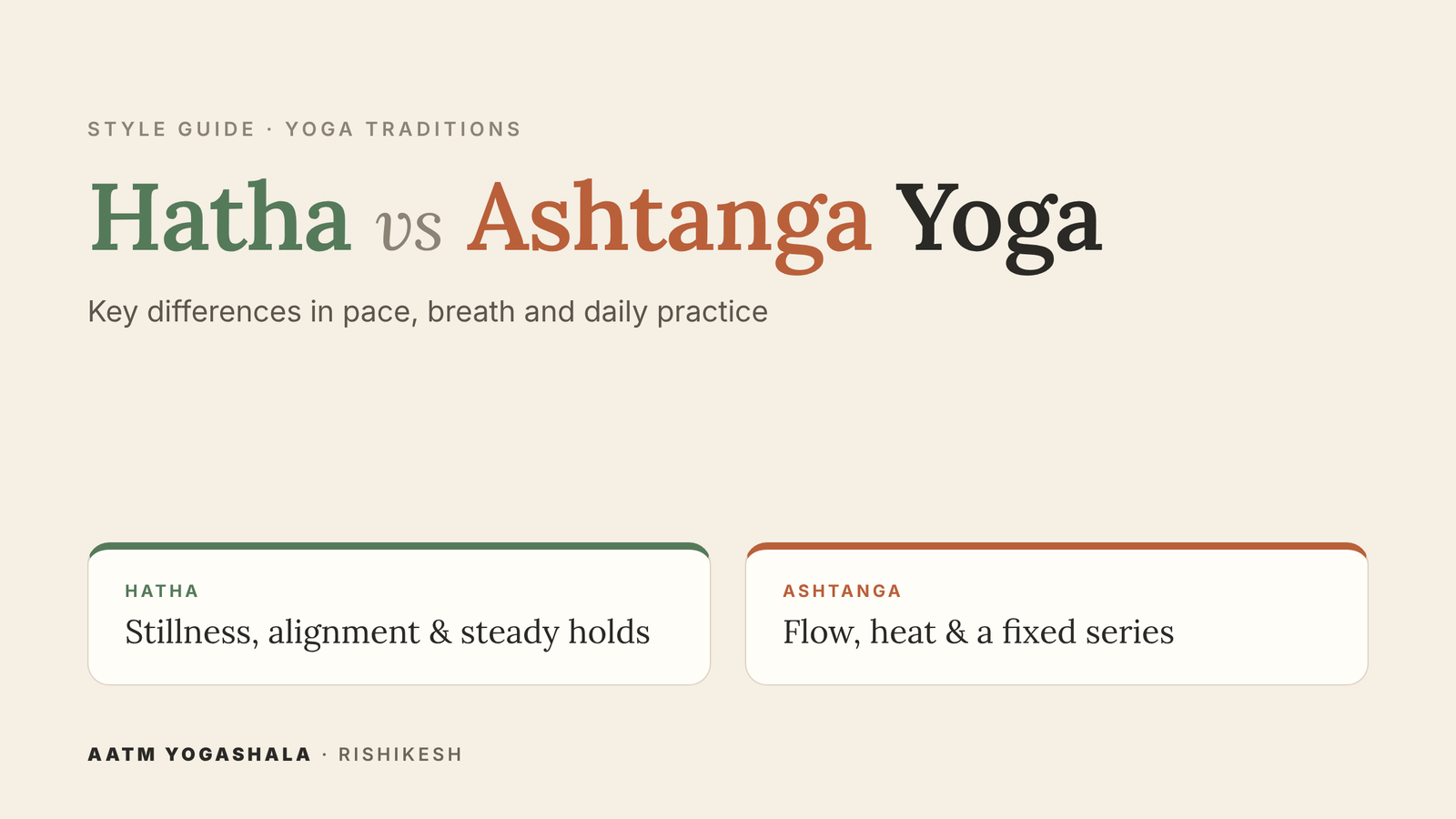
Hatha vs Ashtanga Yoga at a Glance
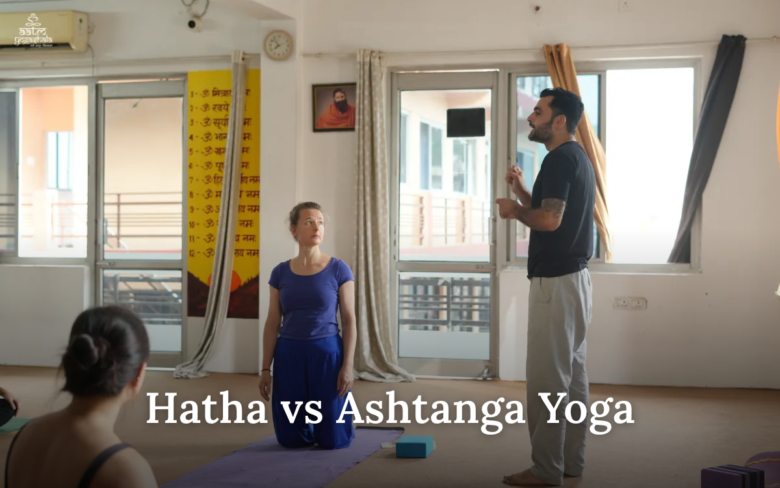
Understanding the hatha yoga vs ashtanga yoga difference requires examining posture duration, respiratory regulation, and physiological intent. While both traditions originate from authentic Indian Vedic science, they direct the human nervous system through contrasting mechanical pathways. Classical Hatha yoga emphasizes static postural holds, joint stabilization, and conscious breath awareness to equilibrate solar and lunar bio-energies. In contrast, Ashtanga yoga executes a predetermined, continuous athletic sequence linking each posture to a designated breath count, internal muscular lock, and visual focal point.
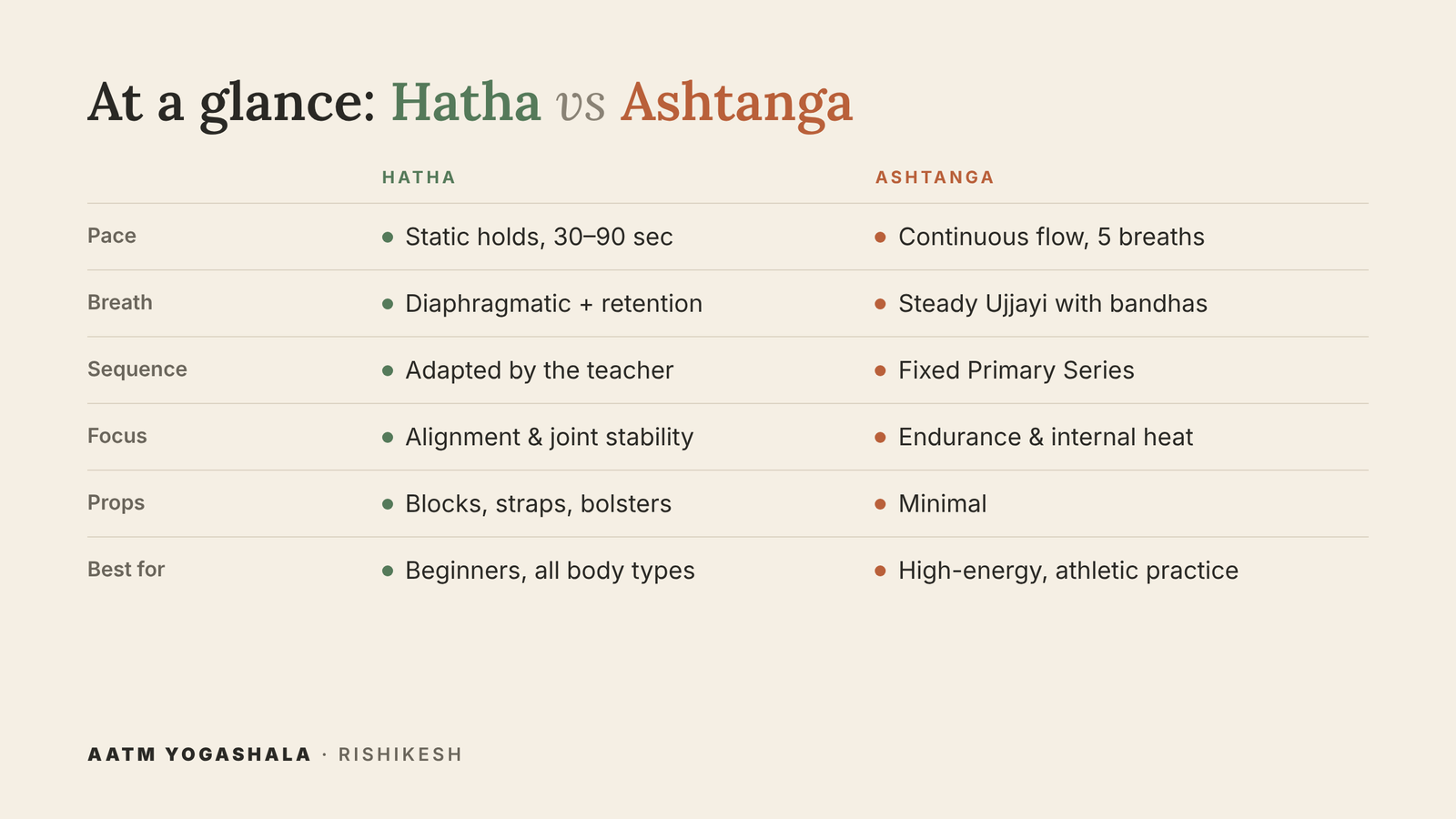
- Pacing and Static Holds: Classical Hatha sustains individual postures for 30 to 90 seconds, whereas Ashtanga maintains a continuous moving cadence of five breaths per posture.
- Respiratory Methodology: Hatha emphasizes diaphragmatic breathing and subtle retention, whereas Ashtanga demands uninterrupted friction breathing (Ujjayi) coupled with pelvic locks.
- Structural Sequencing: Hatha allows customized teacher sequencing adapted to student anatomy, whereas Ashtanga follows an unalterable fixed series (Primary Series / Yoga Chikitsa).
- Cardiovascular & Nervous System Impact: Hatha stimulates parasympathetic recovery through isometric holding, while Ashtanga elevates cardiovascular endurance and metabolic heat.
- Integrated Teacher Training: At Aatm Yogashala, our 200-hour program combines both systems, providing dual competency accredited through Yoga Alliance.
1. Classical Roots: Textual Lineage and Historical Origins
Both traditions share sacred roots in ancient India, yet their scriptural development followed different timelines and teachers:
- The Classical Foundation of Hatha Yoga: Derived from the Sanskrit roots “Ha” (solar prana) and “Tha” (lunar prana). Codified in the 15th-century Hatha Yoga Pradipika by Swami Swatmarama and expanded in the Gheranda Samhita, it was designed as an preparatory physical discipline to purify bodily nadis for prolonged seated meditation.
- The Modern Codification of Ashtanga Vinyasa: Revived in 20th-century Mysore by Tirumalai Krishnamacharya and codified by K. Pattabhi Jois based on ancient teachings attributed to the Yoga Korunta.
- Understanding Diverse Traditions: Studying the historical context helps practitioners appreciate the different schools of yoga and their unique physiological contributions.
- Mindful Movement vs Mechanical Exercise: Classical scriptures clarify the fundamental difference between asana and exercise, emphasizing how breath awareness distinguishes yogic practice from gym training.
- Traditional Guru-Disciple Lineage: At Aatm Yogashala, teachers guide students through traditional verse chanting, beginning every Ashtanga session with the classical Ashtanga yoga mantra.
2. Movement Architecture: Dynamic Vinyasa vs Static Stability
The fundamental mechanical distinction lies in how the human skeleton moves through space and engages muscular tissue:
| Structural Variable | Classical Hatha Yoga | Ashtanga Vinyasa Yoga |
| Pacing & Cadence | Slow, deliberate, static holds (30–90 seconds) | Rapid, continuous, rhythmic flows (5 breaths per asana) |
| Sequencing Structure | Adaptive sequencing responsive to student needs | Fixed, rigid sequential series (Primary Series) |
| Primary Physical Focus | Isometric strength, joint mobility, posture refinement | Muscular endurance, cardiovascular stamina, deep heat |
| Nervous System Response | Parasympathetic tone activation, lowered heart rate | Sympathetic-parasympathetic oscillation, metabolic fire |
| Prop Usage | High utilization of wooden blocks, straps, bolsters | Minimal prop reliance; emphasizes internal body architecture |
Technical Analysis of Mechanical Dynamics:
- Isometric Load in Classical Hatha: Sustained posture holds recruit stabilizing deep joint muscles and lengthen tight connective fascia without excessive joint impact.
- Plyometric Heat in Ashtanga: Continuous jump-backs and jump-throughs between postures build core abdominal strength and burn metabolic waste through profuse sweating.
- Gentle Exploratory Routines: Trainees learn how to structure accessible practices by studying traditional gentle Hatha yoga sequences.
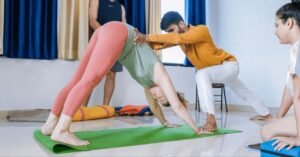
- Injury Prevention Protocols: Hatha allows teachers to pause and modify joint angles immediately, protecting students with hypermobility or spinal disc sensitivities.
- Postural Discipline & Memorization: Ashtanga trains students to memorize sequencing independently, fostering self-reliance and internal meditative focus.
3. Breath Mechanics: Pranayama Retention vs Continuous Ujjayi
Breath functions as the bridge between conscious skeletal movement and the subconscious nervous system:
- Hatha Breath Mechanics: Emphasizes slow, unhurried belly breathing. Instructors incorporate conscious breath retention (Kumbhaka) and alternate nostril cleansing (Nadi Shodhana) between posture sets to cool the nervous system.
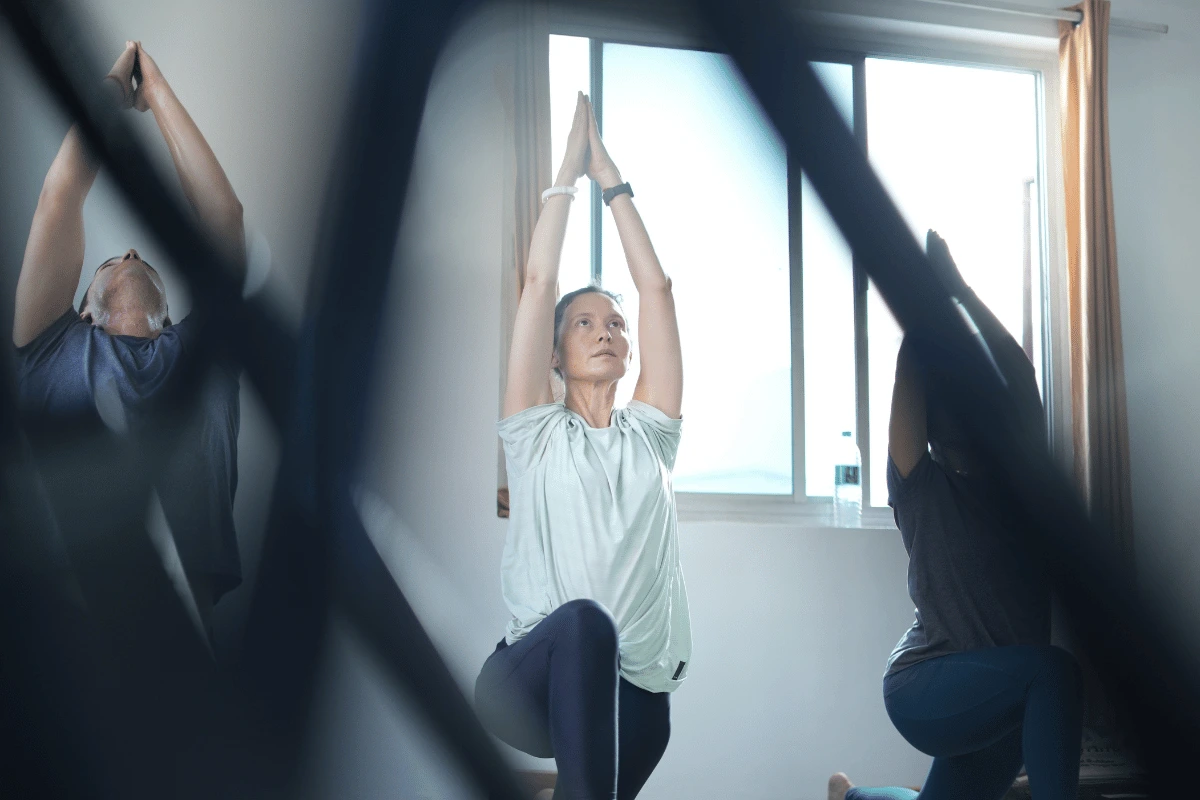
- Ashtanga Breath Mechanics: Utilizes continuous Ujjayi Pranayama (victorious ocean breath) generated through slight glottic constriction. The steady sound serves as an internal audio metronome.
- The Tristhana Method: Ashtanga coordinates three focal points simultaneously: posture (Asana), breathing system (Ujjayi with Bandhas), and gazing direction (Drishti).
- Internal Core Locks (Bandhas): Both styles teach Mula Bandha (pelvic lock) and Uddiyana Bandha (abdominal lift), but Ashtanga demands unbroken engagement throughout dynamic flows.
- Pranic Equilibrium: While Ashtanga stokes internal bodily heat (Agni), Hatha provides cooling counter-practices that prevent physical exhaustion.
4. Comparing the Daily Practice Experience
To decide which style matches your personal constitution and goals, consider the practical classroom experience:
| Practice Element | What to Expect in Hatha Yoga | What to Expect in Ashtanga Yoga |
| Room Atmosphere | Quiet, introspective, calm, with guided alignment cues | Energetic, rhythmic breathing sounds, intensive heat |
| Teaching Style | Hands-on alignment clinics, verbal posture breakdowns | Mysore-style self-practice or traditional Sanskrit counts |
| Typical Class Length | 60 to 75 minutes with restorative cool-down | 75 to 90 minutes of continuous vigorous movement |
| Ideal Body Constitution | All body types; especially beneficial for beginners | High energy practitioners seeking athletic discipline |
Key Experience Factors:
- Accessibility for Beginners: Hatha offers a welcoming entry point where students can ask questions, rest between postures, and use props comfortably.
- Athletic Intensity: Ashtanga appeals to students looking for structured progression, physical challenge, and cardiovascular conditioning.
- Mental Focus: Hatha develops patience through stillness, while Ashtanga anchors the mind through continuous rhythmic movement.
- Therapeutic Application: Hatha asanas can be easily modified for spinal rehabilitation, joint stiffness, and stress reduction.
- Holistic Balance: Combining both styles ensures practitioners develop both functional joint stability and dynamic cardiovascular stamina.
5. Dual Stylistic Mastery at Aatm Yogashala Rishikesh
At Aatm Yogashala, we reject the notion that yoga teachers must restrict themselves to a single tradition. Our certified 200-hour yoga teacher training in Rishikesh provides comprehensive education in both systems:
- Morning Hatha Alignment Labs: 07:00 AM sessions dissect classical postures, skeletal biomechanics, and precise hands-on corrections with lead teachers.
- Afternoon Ashtanga Vinyasa Series: 04:00 PM practices build cardiovascular stamina, sequencing discipline, and mastery of the Primary Series.
- Specialized Vinyasa Education: Trainees looking to deepen dynamic flows can explore our specialized Ashtanga Vinyasa teacher training in Rishikesh.
- Guidance from Lineage Gurus: Learn directly from native masters on our Indian Yoga Teachers in Rishikesh faculty team.
- Transparent All-Inclusive Pricing: 24 Days / 23 Nights residential packages start at $699 USD (Triple Sharing), $950 USD (Double Sharing), and $1,050 USD (Private Room).
6. Daily Schedule of a Multi-Style Yoga Trainee in Rishikesh
The daily routine is structured to balance intensive dynamic flows with grounded alignment studies:
| Time Slot | Yogic Practice & Daily Focus | Stylistic Orientation | Guidance |
| 05:30 AM – 06:00 AM | Morning Wake-Up & Herbal Tea | Cleansing & Hydration | Self-Paced |
| 06:00 AM – 06:45 AM | Shatkarma Cleansing & Pranayama | Hatha Yogic Purification | Pranayama Master |
| 07:00 AM – 08:30 AM | Classical Hatha Yoga Asana | Alignment, Static Holds & Stability | Lead Hatha Guru |
| 08:30 AM – 09:45 AM | Sattvic Ayurvedic Breakfast | Nutrition & Cellular Recovery | Nutrition Team |
| 10:00 AM – 11:00 AM | Yoga Philosophy & Vedic Scriptures | Classical Text Study | Philosophy Scholar |
| 11:15 AM – 12:15 PM | Anatomy, Physiology & Biomechanics | Joint Mechanics & Adjustments | Medical Doctor |
| 01:00 PM – 02:00 PM | Sattvic Ayurvedic Lunch | Wholesome Vegetarian Dining | Nutrition Team |
| 02:00 PM – 04:00 PM | Rest & Self-Study (Swadhyaya) | Independent Integration | Quiet Hours |
| 04:00 PM – 05:30 PM | Ashtanga Vinyasa Yoga Asana | Dynamic Primary Series & Flow | Lead Ashtanga Guru |
| 06:00 PM – 07:00 PM | Meditation, Mantra & Sound Bath | Inner Stillness & Nada Yoga | Lead Sound Master |
| 07:30 PM – 08:30 PM | Nourishing Sattvic Dinner | Evening Ayurvedic Meal | Nutrition Team |
| 08:30 PM – 09:30 PM | Satsang / Community Reflection | Q&A and Cultural Circle | Communal Circle |
| 09:30 PM | Lights Out & Restful Sleep | Complete Physical Recovery | Mandatory Quiet |
7. Frequently Asked Questions
Hatha yoga holds each posture for roughly 30 to 90 seconds and lets the teacher adapt the sequence, with a focus on alignment and breath awareness. Ashtanga moves continuously through a fixed series, linking each posture to five breaths with Ujjayi breathing, bandhas and a set gaze point (drishti).
Hatha is usually the better starting point. The slower pace leaves time to learn safe alignment, use props such as blocks and straps, and rest between postures. Many students move on to Ashtanga once they have built basic strength, flexibility and breath control.
Ashtanga is generally more physically demanding because it flows without breaks, includes jump-backs between postures and builds a lot of internal heat. Hatha can also be challenging through long holds, but it is easier to slow down and modify for different bodies.
Hatha uses slow diaphragmatic breathing and adds pranayama such as Nadi Shodhana and breath retention (kumbhaka) between postures. Ashtanga uses continuous, audible Ujjayi breathing synchronised with every movement and supported by Mula and Uddiyana Bandha.
Ashtanga burns more calories per class because of its continuous movement and heat, so it suits people looking for cardiovascular fitness. Hatha builds strength and flexibility and lowers stress, which also supports healthy weight management when practised regularly.
A Hatha class usually lasts 60 to 75 minutes and ends with a restorative cool-down. A full Ashtanga Primary Series class typically runs 75 to 90 minutes of continuous practice.
Yes. The 200-hour yoga teacher training at Aatm Yogashala in Rishikesh teaches Hatha alignment in the morning and the Ashtanga Primary Series in the afternoon, so graduates can teach both slow, alignment-based classes and dynamic flow classes.
Related reading:
8. Actionable Next Step: Choose Your Training Path
Whether your calling is the grounded alignment of classical Hatha or the dynamic heat of Ashtanga Vinyasa, mastering both disciplines creates a complete and versatile teacher:
- Apply for Upcoming Batches: Reserve your seat for 200-Hour Multi-Style YTT
- Admissions Assistance: Contact our team via our Contact Page or message us on WhatsApp at +91 84459 93766.
- Email Inquiries: Reach our academic team directly at aatmyogashala@gmail.com for curriculum syllabus details.