Grounding is a technique of relating with the earth aspect in order to feel more grounded, rooted, stable, resilient and balanced. By developing a sense of grounding in your body consciously, you beckon a sense of presence, calmness and clarity of mind. Grounding yoga poses help improve balance, calm the mind, and connect your body with the earth.
You may get the impression of tapping into the very core of the earth itself, stealing its unshaken power and wisdom and infusing it into your physical body and enhancing your mental and emotional stability. You can enhance your feeling of being grounded, centered and steady on the mat and off the mat by doing yoga postures that emphasize the earth element.
What is Grounding?
Grounding is a state of association with Mother Earth physically and spiritually. A physical contact is obtained through placing some of the body parts on the ground or the floor, such as the feet at the bottom. Through connection to the power of the earth, a spiritual connection is attained. Practising grounding postures yoga regularly can increase stability and create a strong foundation for both body and mind.
When the individual is grounded, he/she feels powerful, steady and safe. They possess a sense of balance in their life and have a greater degree of confidence. A grounded individual is also a strong person who can stand anything that comes their way.
Connection Between Yoga and Grounding
Yoga enables the space to be grounded, facilitating the experience of the consciousness of the body and mind, which is not addressed by a physicalistic materialistic perspective of the body. The relation between yoga and grounding may be stated in the following way: yoga helps to ground the space, to experience the consciousness of the body and mind, which the physicalistic materialistic vision of the body does not deal with. A simple grounding yoga sequence can relax your nervous system and bring a deep sense of inner peace.
One of the ways yoga helps to be grounded is through its postures that include different parts of the body being in contact with the earth (or yoga mat). These yoga exercises assist in developing the physical relationship that is required to be grounded. They can consist of performing a pose with either the right foot or the left foot firmly on the mat. Perhaps it is only the right knee or left knee or right hand or left hand. The physical relationship may happen with any part of the body.
Yoga is also often spiritual, and this helps in grounding. Yoga makes many individuals feel more in touch with a higher power. It is through repeated practice that they become more attached to (and with) a force that is larger than themselves.
Even grounding can be achieved with the help of yoga by opening the chakras that are blocked. The body has seven chakras. The root chakra, or the Muladhara chakra, is the first. It is located in the rear of the spine, and it is connected with the sense of security, stability, balance, and grounding. Some yoga poses are able to clear the root chakra.
Read Also:- Kundalini Yoga Teacher Training in Rishikesh
Best Grounding Yoga Poses
Whether it is to help yourself feel more grounded, or you want to create a grounding yoga class for your students, the following poses are some suggestions of poses to include:
- Bridge pose:- It is a yoga pose that entails having your knees bent as you lie on your back. Hips are raised towards the ceiling with the fingers interwoven under you. Place the forearms into the mat.
- Chair pose:- This is not as easy as it may seem, but also good at grounding. It includes pushing the hips back and down like sitting in an imaginary chair. Abs are drawn in, and the tailbone is down.
- Corpse pose:- It is a grounding pose combined with some surrender, often used as a final resting pose. You are lying on your back with your shoulder blades in, inhale and exhale. And there is only a small gap between your body and arms.
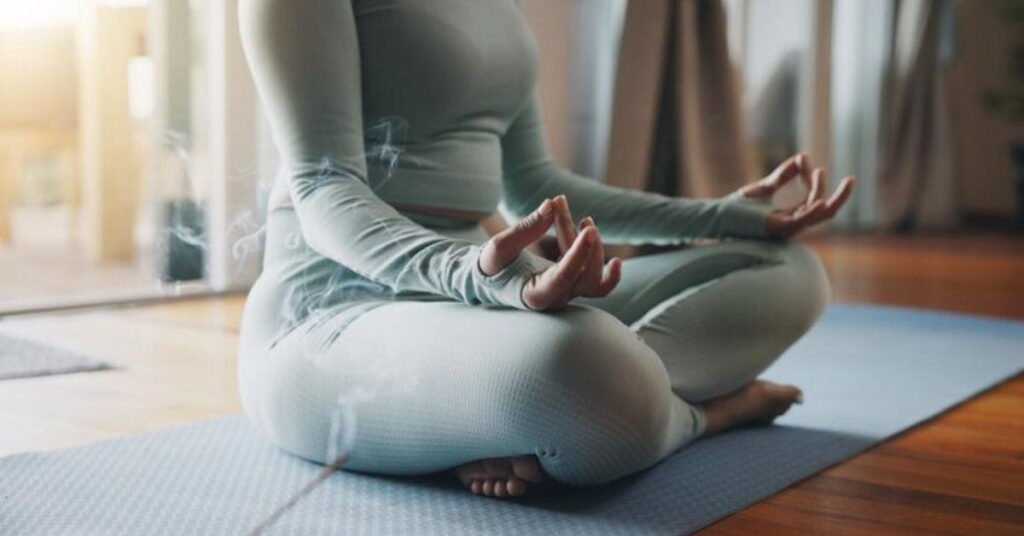
- Easy pose:- This is among the poses which are traditionally regarded as yoga. It entails the cross-legged sitting against the floor with the head erect. In the Easy pose, press the sit bones into the yoga mat.
- Mountain pose:- It is one of the best grounding yoga poses. The feet of the bottom are supported on the floor in this yoga asana. The chest is heaved up, and the shoulders are brought down and back. Palms are facing forward.
- Plank pose:- Plank pose involves grounding of both the hands and the balls of the feet. Stretch the body, but bring the crown of the head forward and tuck in the tailbone.
- Seated Forward Bend:- This is a pose where the whole back part of the legs is lying on the mat, and it provides greater physical support. As you are seated, you round forward at the hips. The head and neck are relaxed.
- Tree pose:– This is a grounding pose, though one foot is on the floor. Heels raised on one leg and resting against the inner thigh of the other leg brings about stability, both literally and figuratively.
Remain in all these grounding yoga postures for a few breaths. New to yoga, then you should have three to five breaths. In case you are more experienced, you should attempt to maintain a pose for up to 10 breaths. A gentle grounding yoga pose for Anxiety can reduce stress and promote emotional stability.
Last Words on Grounding Yoga Poses
The practice of grounding yoga poses teaches you to start feeling the power of the earth element in you. These are poses that enable you to be in touch with the ground you are resting on and derive strength and stability from the ground up.
You will notice as you get used to the practice that you get grounded and centred, on and off the mat. The earth element in you will be enhanced, and it will give you a strong platform in whatever you do in life. Certain grounding yoga poses root chakra practices help activate the root chakra and build feelings of safety and security.
As a beginner or an experienced yogi, these grounding poses can aid in getting to know more about the earth element and improve your well-being in general. Therefore, find some time to learn these grounded yoga poses and how they can enable you to become stronger not only physically but also mentally.
Easy grounding yoga poses for Beginners are perfect for building confidence and improving body awareness. Learn to harness the strength of the earth element in you, and use it as your guide on your way to inner strength and equilibrium.
Quick Answers to Commonly Asked Questions
Q. Who can be well off with grounding yoga poses?
A. It can help almost everyone who:
1. Feel nervous, lost, or disoriented.
2. Have trouble focusing.
3. Have stress or burnout.
4. Desire improves emotional control.
5. Required assistance in major life changes.
They are also a good exercise among beginners since they develop strength and body awareness.
Q. What is the effect of grounding poses on anxiety?
A. Grounding poses:
1. The feet and hands have pressure receptors that should be activated.
2. Dilated heart rate and breathing.
3. Promote attentive consciousness.
4. Use big muscles, which are capable of relieving tension.
Your nervous system receives the warning of being safe because of the high level of physical contact with the floor.
Q. How do I learn grounding poses?
A. 1. Beginners:- 3–5 slow breaths.
2. Intermediate:- 30–60 seconds.
3. On restorative poses:- 13 minutes.
4. Breathe slowly and not long
Q. Is it possible for beginners to practice grounding yoga?
A. Yes. Numerous grounding poses are introductory and basic. Start with:
1. Mountain Pose
2. Child’s Pose
3. Low Lunge
4. Seated Forward Fold
Support may be needed with blocks, blankets or a wall.
Also Go Through:-