Japa Japa, meaning the repetition of divine meaning, involves different Sanskrit mantras regarded as sacred syllables. Generally, they are repeated in a low voice; a bead or a Mala is used while chanting or during repetition. In all religions, sacred syllables are different, but the method of chanting is the same.
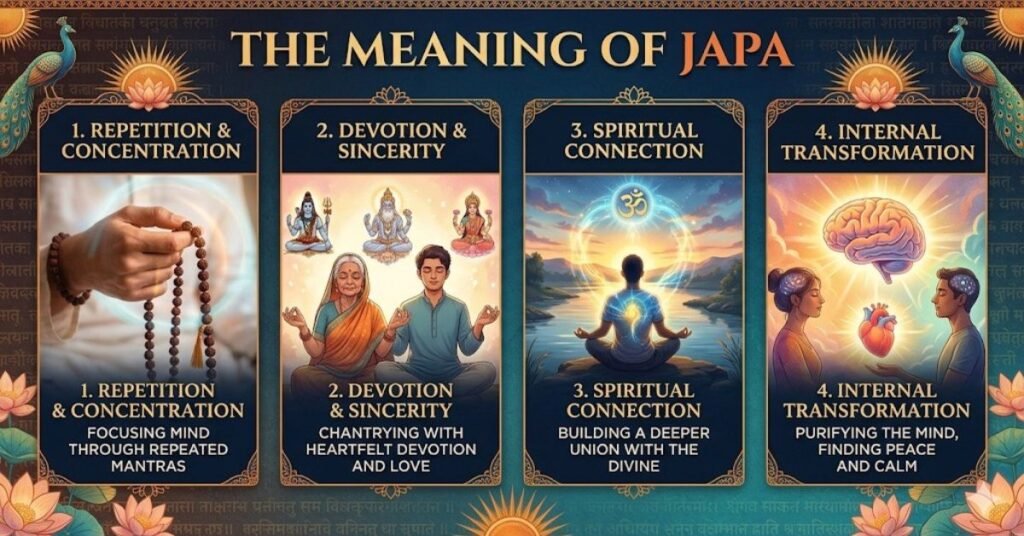
The word ‘japa’ comes from Sanskrit and is also kept in the Hindi dictionary in the same form. Uttering in a low voice is the most appropriate explanation of Japa. Sometimes it is also referred to as internal repetition or affirmation. In Christianity and Judaism, different affirmations are connected to the positivity of heart and mind. The real science behind Japa is making rhythm with the body and the mind.
Japa Meaning in English & Japa Yoga
When this word is repeated like Japa Japa, then its meaning is with continuous devotion, uttered in a low sound or internally. Also, it is preferable to go into a deep state so that body tissues became habitual of the sacred syllable or chanting Mantra. It can also appear in devotional songs (bhajans) as a rhythmic, emphatic expression of surrender and prayer.
Japa Yoga words come from continuous chanting without counting the number of times, so that the Mantra is internalised. Slowly, it becomes a subconscious practice and a natural, automatic part of existence. There are several forms of Japa Japa which are also chanted during Yoga practices like the sacred syllable “om”. It is repeated in three sounds usually: Aaa, Uuu, Mmm. These words create discipline and synchronize with breathing.
Related Post:- Brahmacharya Meaning Rules How to Follow Brahmacharya
What are the Different Types of Japa?
Based on the method of chanting, there are several types of Japa. Some of them are good for beginners, others are more preferable for the advanced practitioner. One of the most prominent foundations of chanting is making rhythm, and the practitioner is able to focus.
Japa japa or chanting is also used for building concentration of the mind. Here are some mentioned methods of chanting based on internal or external chanting.
Vaikhari Japa
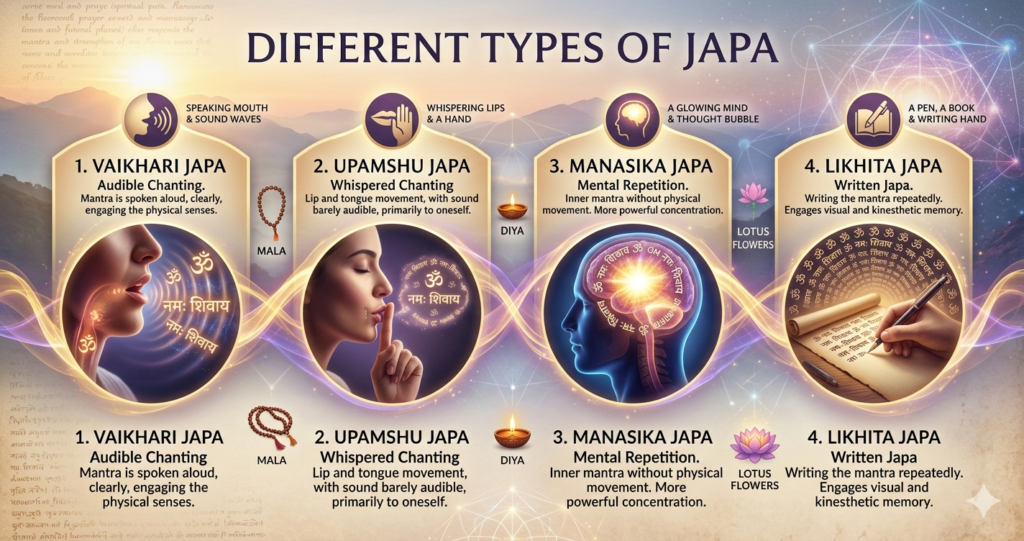
Its meaning is chanting aloud or group chanting, most of the time performed in Bhajan and Kirtans. It is the best method for the beginner and helps in focus, wondering mind stops because of the engagement of the ear, tongue, throat, and mind.
Upanshu Japa
It is a slow repetition in a low voice, so that only the practitioner can hear that voice. It is done with the help of lip movement, or like whispering something in a low tone. It is considered 10 times more powerful than aloud chanting or Vaikhari Japa. The meaning of Upanshu Japa is hidden chanting.
Mansika Japa
Mental repetition, or without lip movement, internal repetition of the sacred syllable, is known as Mansika Japa. This is the most powerful way of chanting with strong mental focus on it. Both discipline and focus are needed in Mansika Japa. It is best for the advanced practitioner.
Likhita Japa
It engages both mind and hand in divine words/syllables chanting, which helps in creating focus and concentration. Focus, devotion, and discipline can be created with the help of the divine word writing. It is noticeable in some Indian communities to write “ Ram, Ram” on everything and everywhere.
Types of Chanting Based on Counting
Most of the time, chanting is done with proper counting. In Hinduism, the common practice of chanting is done in odd numbers like 11, 21, 51, or 101. Counting of the Mantras is done with the help of beads, and there are some uncounted methods also.
1. Mala Japa
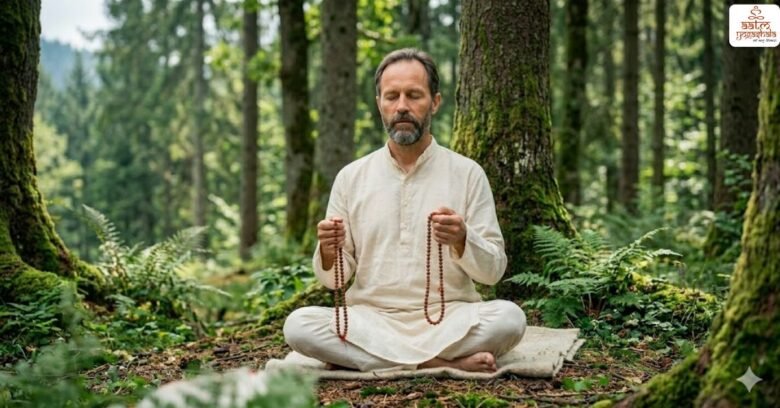
It is done with the help of beads and counting the rounds of the rosary on the beads. Each bead is counted as one mantra; most of the time, there are 108 repetitions in a bead. It is the best method for beginners, and it helps in making concentration very fast.
2. Sankhya Japa
It is done with the help of fix count in mind, it is also known as calculated or counted Japa. It is the best method for making commitments and completing them. Your determination will be increased after the Sankhya Japa.
3. Ajapa Japa
This is countless Japa, or we can say that when we are beyond Japa, or the practitioner’s existence is merged with the Mantra. The Mantra became so natural and exists as a part of existence, and it is also a mythical sentence that, in sleep, the mantra is also continuous in such methods.
How to Do Japa or Chanting?
Because the Sanskrit meaning of Japa is different from chanting, we can say that chanting is a part of Japa. Japa Japa has a deeper existence and meaning in depth; it is a practice in which we make a connection with god or the higher self. Mantra is specific chanting; in Hinduism, there are many sacred syllables, both long-form and short-form.
Om Namah Shivay, Ram Ram, Om Namah Bhagvate Vasudevaye Namah are some examples of the sacred syllables. You can choose anyone from these and also from outside, based on your experience. Then cleanse yourself properly. Here is the proper method of chanting in a rhythm.
- Cleanse yourself by bathing or by washing your hands or feet.
- Choose a comfortable space to sit for a long time.
- The best time is morning and evening, and better to have an empty stomach.
- You can sit with a candle or an earth lamp in front of you or light incense near you.
- It is a choice to keep a symbol, image, or offering in front of you; if you can also practice without that, then it is also preferable.
- Make a connection with god by joining hands or Namaskara, and start with gratitude and permission.
- Sit on a mat, take a Mala or bead, and start chanting without any disturbance.
- Upon completion, do Namaskara and come to a normal lifestyle.
Wind Up
The meaning or definition of japa is repeating divine syllables in rhythm to achieve concentration and focus. It is practised in different religions with different names; in Islam, it is known as Tasbi, and is also practiced in Sikhism and Jainism. Methods of practice are different and are also based on the level of the practitioner.
If you are a beginner, then you can take the help of a bead; otherwise, silent chanting or Ajapa Japa is the best method. Methods of chanting include an empty stomach in time of evening or morning. Japa Yoga is another word for indulging yourself deeply in chanting. To become absorbed with the sacred syllable is one method of Japa, and another name for that is Japa Yoga.
Frequently Asked Questions
Q. Can I do japa in bed?
A. Yes, you can do Japa or chanting in bed before sleep. According to some Vedic texts, there is no rule for Japa. You can just focus on god and then start chanting without any obstruction.
Q. What does japa mean in slang?
A. Not approvedJapa is also a Yoruba language, which is defined in Nigerian slang. Its meaning is to escape and just disappear to avoid anything or any situation. A hasty and emergency body language or manner is also denoted by the same word.
Q. What are the four types of japa?
A. The four main types of Japa are: Vaikhari Japa (aloud chanting), Upanshu (lip movement chanting), and Mansika (internal chanting), Likhita Japa ( written chanting).
Read Post:-