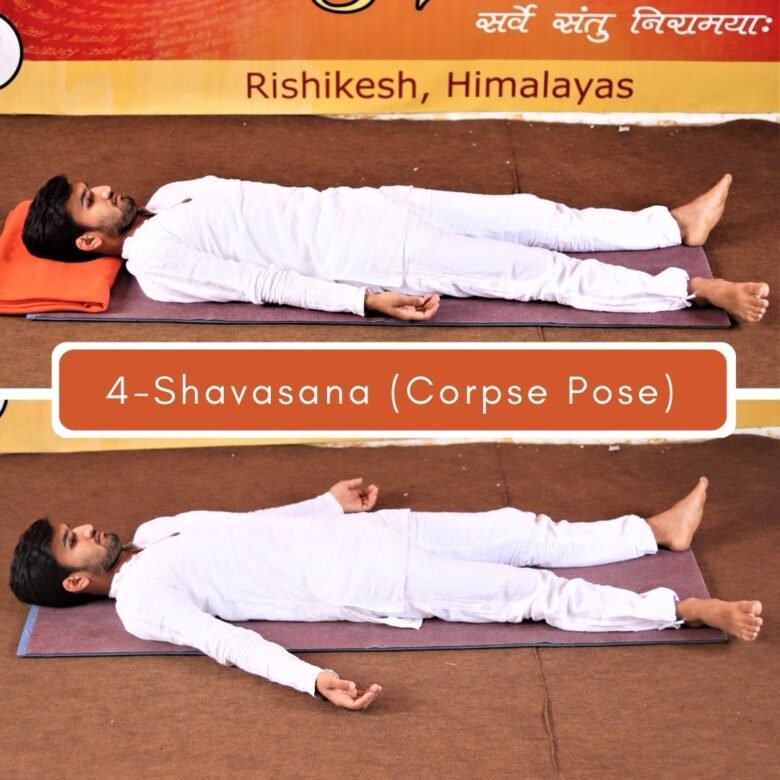
The shava-asana is also called the corpse pose. The name of this pose is taken after the prone position of the corpse lying down. The yoga corpse pose, savasana, helps calm the nervous system and improve overall mental clarity. It is a rest and a relaxation point that is normally practised at the end of a yoga session. Regular practice of shavasana benefits the mind by reducing stress and enhancing deep relaxation.
The yoga corpse position allows the body to fully rest and recover after intense yoga sessions. Shavasana involves you having a relaxing pose where you must lie flat on the floor or mat and face upwards. It entails the focus of all body parts during deep breathing. The posture does not look difficult, but it is one of the hardest since the art of relaxation is not as simple as it appears. The yoga death pose symbolizes complete surrender, promoting peace and mental stillness.
The Advantages of Corpse Pose in Yoga
The positive effects of frequent savasana include less stress, more focus, complete body recovery, and a decreased fear of death. We will now examine the particular advantages of corpse pose in yoga in a little more detail. Practising the savasana yoga position can improve sleep quality and relieve physical tension.
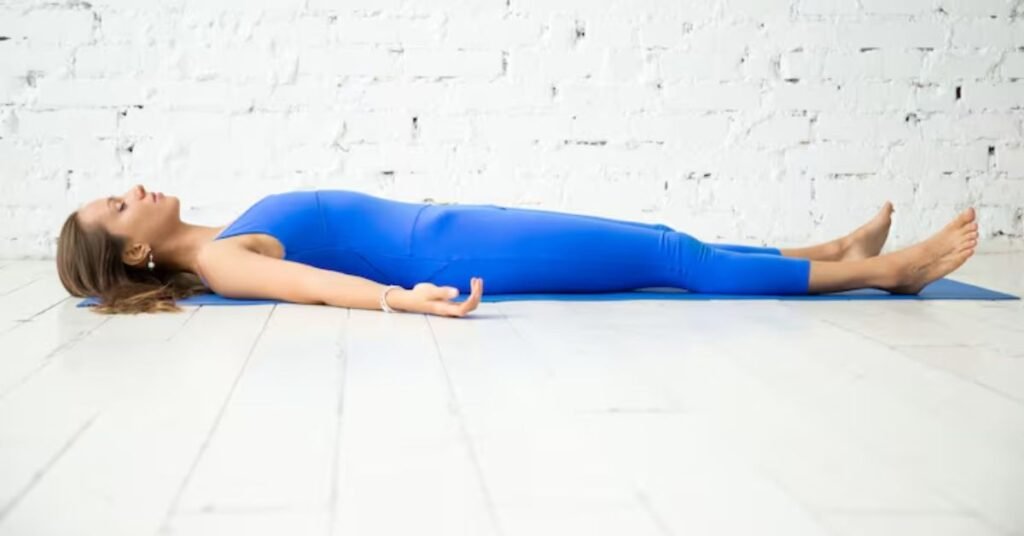
1. Strengthen, elongate, and lengthen the body
The meaning of shavasana is “corpse pose,” representing stillness and deep relaxation. Being a restorative yoga posture, savasana provides the entire body with an opportunity to relax, rest, and de-tense the deep-tissue layers.
Corpse pose helps to reduce blood pressure with a lower heart rate in the study participants of up to 35 minutes following the relaxation practice. The same was affected on participants with high blood pressure (hypertensive) and normal blood pressure (normotensive).
2. Reduce stress
Making a habit of posing like dead bodies can maximize our health by facilitating the reduction of stress and activation of the parasympathetic nervous system (rest-and-digest system). Research indicates that through extended and profound relaxation on the part of the rest-and-digest arm of our nervous systems, savasana diminishes the effect of the stress response even beyond the yoga session.
An experiment conducted by the National Journal of Basic Medical Sciences in Mysore has proved that the standard practice of savasana reduces the resting pulse rate and activates the parasympathetic system. Savasana students, therefore, have a diminished tendency to attain optimal levels of stress in their lives.
3. Improve well-being
Engaging in a consistent savasana practice provides a way of rooting and holding when you are in a state of anxious spirals or depression. The act of relaxing the body and being uncoupled from our thoughts contributes to drawing our awareness. When someone asks what is Shavasana, it refers to lying flat on the back to achieve total relaxation. Body scan and closing your eyes is like a workout to your mind, and the more you do it, the more attention you are going to have in your everyday life.
4. Reduce our fear of death
The pose is also called Mrtasana or the death pose. It is the art of dying, and the more you drill, the more you get to know that non-existence is rather peaceful. The death that is addressed here is the death of the ego. When you give yourself up to non-action, corpse pose exercises the death of everything clinging and holding to anything beyond yourself to make yourself happy. In savasana, you will engage in the practice of realising that all things are perfect just as they are. There’s nothing left to do.
Read Also:- Yoga Retreat in Rishikesh
How to do the Savasana Pose?
Since corpse pose is a concept of the final rest of meditation, savasana must be the last practice of yoga. The procedure of shavasana involves lying still, slowing the breath, and relaxing each muscle. These steps are going to aid the proper entry into the savasana pose and deep relaxation.
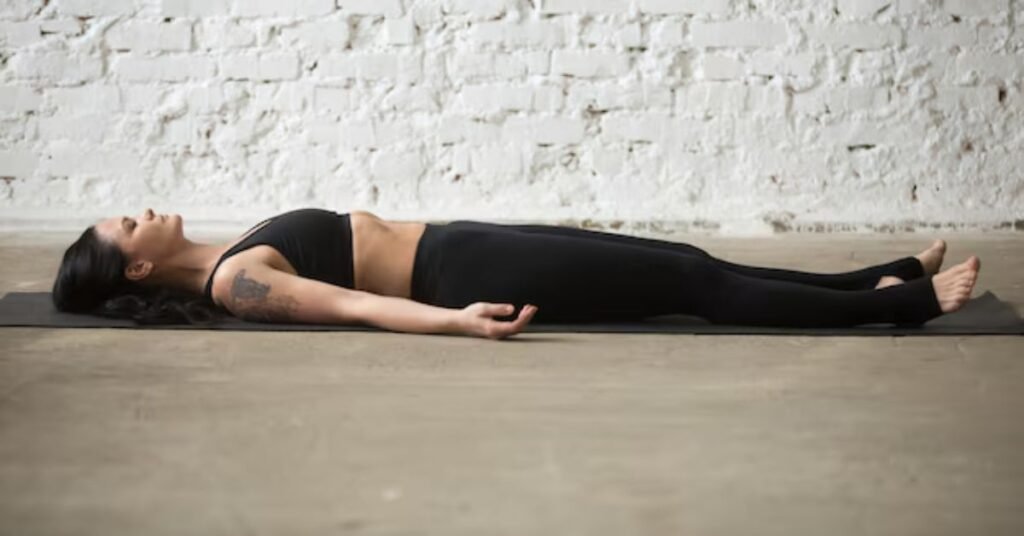
- Lying: You need to lie on your back, close your eyes. Lie down at the end of your yoga practice and face the sky. Keep your arms at your sides, comfortingly with your palms raised.
- Soften your lower back and tuck your tailbone: Now, keep the lower back relaxed and very subtly lift your pelvis to tuck your tailbone. Then get back down to the mat.
- Lengthen your neck: Extend the back of your neck by tucking the chin a little in toward the chest without straining the muscles of your neck.
- Relax: Visualize your toes of each foot, and then move up your legs, knees, hips, and pelvis. Unclench your fingertips, moving them up your arms to your shoulders. Last but not least, relax your stomach, back, chest and neck. Take the strain out of your jaw and forehead. In deep relaxation of your entire body, allow your body to melt into the mat.
- Meditate: Experience your thoughts come, forget the past. Do not think about the plans, and live in the unknown. Give up, embrace and receive just to be where you are.
- Breathe deeply: Take deep breaths for three to five times to relieve tension and then resume normal breathing patterns.
The length of time to remain in savasana varies between five and 15 minutes, depending on the duration and intensity of the yoga practice. Notice your thoughts without pursuing, associating or laying claim to them.
Take the thought as purely a thought and allow it to melt away by itself, such as anxious thoughts regarding the motion of the body. The precautions of savasana include avoiding the pose if you have back pain and using support if needed. You can go through our website to learn the connection between yoga and the subconscious mind.
Top Questions People Ask
Is Savasana (corpse pose) the most difficult yoga pose?
It is the most challenging pose according to the asana yoga teachers due to the delicacy of the savasana to disconnect with the mind that is coming and doing nothing. As the name suggests, the corpse pose throws us in the face of our fears of not doing anything, death and non-existence.
Is it oK to sleep during savasana?
Being a meditation of death, savasana is the art of giving up. Therefore, when our mind-body desires to sleep, we submit to where we are, and we allow it to occur. The increasing mind-body awareness can be used to substitute distraction.
Somewhere down the line, we can find a moment to have the rest we require to maintain the alertness of our minds in savasana. Alternatively, we can get to the waking and sleeping state of consciousness with the help of supported savasana practices such as yoga nidra.
What is the difference between savasana and shavasana?
Savasana is the curative yoga pose at the conclusion of a yoga practice, where one lies on their yoga mat in a non-pose. Although the proper pronunciation of the Sanskrit word of corpse pose is shavasana, the usual spelling of the English version is savasana.
What is the savasana meaning?
Sava or can be translated as corpse, and asana as pose, position or posture. The combination of these two words is the word savasana, which means corpse pose; it is the last resting posture that yogis employ in order to get deep relaxation.
Also Go Through:-