
Sitting or seated yoga postures are a type of hatha yoga. These seated positions consist of straight and cross-legged, forward bends and leg and/or buttock-to-floor twists. Most seated poses are appropriate since they suit the needs of beginners and yoga students who like calm and therapeutic practices. Seated Yoga Poses help improve flexibility and calm your mind.
Seated Yoga poses enable you to enhance flexibility. These eleven poses are the foundations of our beginner and advanced yogis, with plenty of suggestions on how to use a prop. The seated yoga positions are great for building core strength and balance.
5 Best Seated Yoga Poses to Try
The following are the five best seated yoga poses that you can try. Yoga sitting positions make it easier to relax and stretch deeply.
1. Easy Pose (Sukhasana)
It is a cross-legged seated pose (not to be confused with Lotus Pose or Padmasana), which increases the flexibility of the hips and lower back, improves posture, and facilitates meditation.
- You can sit on the floor with your legs crossed, with your knees opening up and your legs positioned at the opposite side of the knee.
- Place your palms on your knees, and upside down or down.
- Lengthening your spine, pile your head over your shoulders, shoulders over your hips.
- Shoulder relaxation, soften your eyes or loosen your eyes.
- Take a deep breath for 1-5 minutes.
2. Knee Pose (Janu Sirsasana)
This forward fold is done on one leg, which helps you to concentrate on one side at a time, to increase hamstring, calf, spine, and hip flexibility.
- Sitting with your legs straight before you.
- Bend the right knee and place the sole of the right foot against the inner part of the left thigh, and the right knee should fall over to the side.
- Breathe in to stretch your back, with your hands above your head.
- Breathe out to fold forward over your straight leg and leave your chest open. Then keep your foot, or your shin, or your thigh, but do not lift.
- Take a deep breath, which lasts 30 seconds to 1 minute. Repeat on the other side.
3. Hero Pose (Virasana)
It may seem that there is not much action in Hero Pose (Virasana). This posture improves mobility of the ankle, knee, and quad. Thus, it positively influences the posture and facilitates meditation.
- Kneel on the floor in the position that you have your knees together and a little bit farther apart than your hips.
- Sit backwards with heels, back straight.
- Make sure that you position your toes facing up as far as behind you, and your weight is even.
- Bring your hands to your thighs, palm down.
- Take in a deep breath, hold for 1-5 minutes.
4. Cow Face Pose (Gomukhasana)
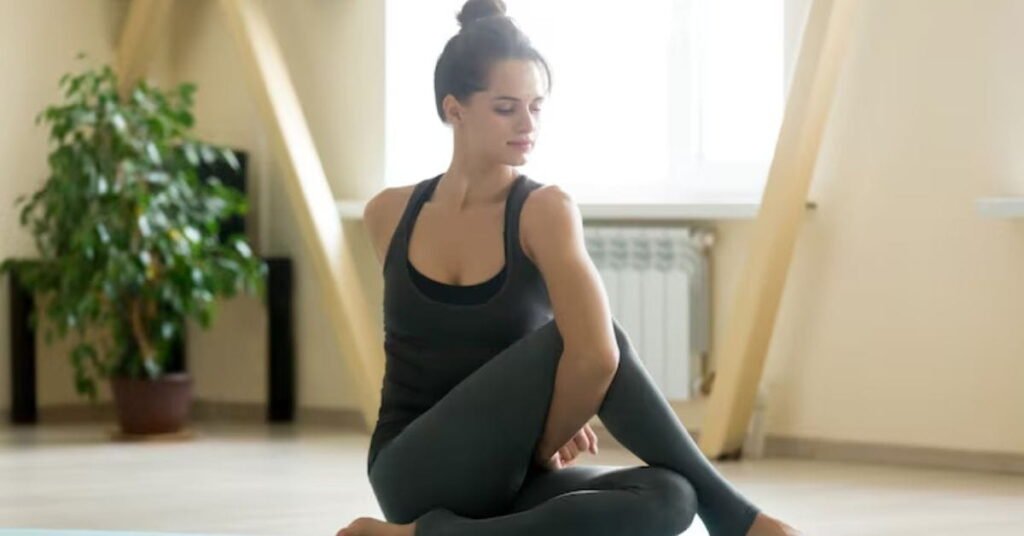
Cow Face Pose lengthens and tightens the arms, shoulders, back, hips and thighs. This seated yoga poses sequence is helpful for your entire body posture as well.
- Bring your legs straight and then cross the right leg across the left one, heaping the knees and rolling back the heels towards the hips.
- Bend the elbow, stretch right over your head, down your back.
- Recline your right arm behind you and bend the arm upwards, attempting to clasp the hands. When you can not reach, then reach out with your fingers straight.
- Breathe in a deep posture and hold for 30 seconds to 1 minute. Repeat on the other side.
5. Seated Pigeon
Seated Pigeon (like a seated figure four) extends the hips, glutes and lower back.
- Sit with knees bent and feel the feet flat to the floor, and have your hands on the floor behind your torso to support the torso.
- Cross left knee with right ankle, giving a figure four shape with the knee facing sideways. Make sure to protect your knee from flexing your right foot.
- Push your right hand on the right knee, pushing it away.
- Bend a little forward to stretch further.
- Deep breathing with a hold of 30 seconds per minute. Repeat on the other side.
Also Go Through:- 200 Hour Yoga Teacher Training Course in Rishikesh
Why Seated Yoga is Great for all Ages?
Seated yoga positions are befitting everyone, regardless of age, starting with young adults and ending with the elderly. They are non-strenuous, strengthen the core muscles, and decrease anxiety. Seated yoga postures support proper alignment and mindful breathing.
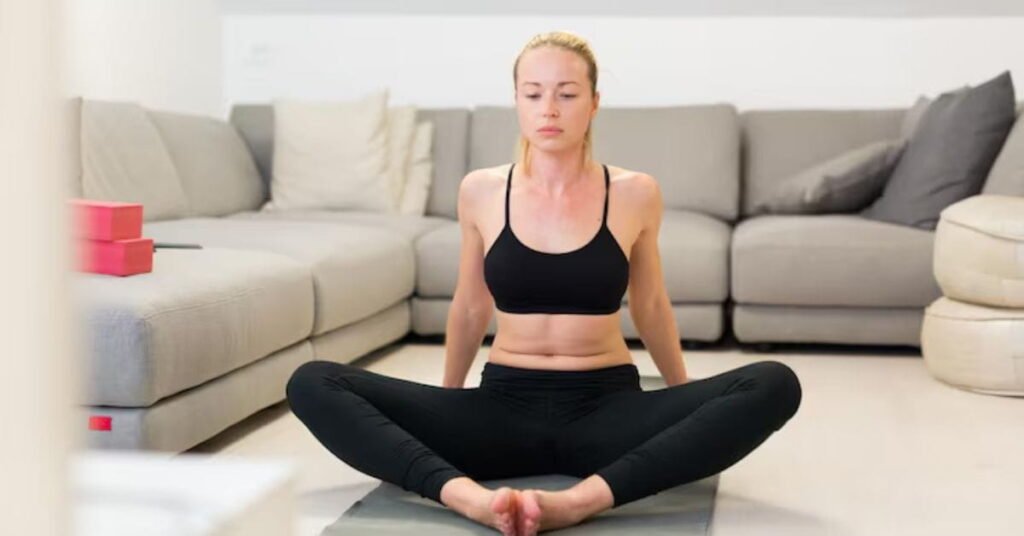
Whenever coming to yoga classes, always request your instructor to instruct you on alignment. Sitting yoga asanas gently open stiff hips and reduce tension. It can be practised regularly, even at home, to enhance health benefits and emotional well-being.
The Advantages of Sitting in Yoga Poses
A daily practice of sitting yoga stretches has numerous health advantages:
- Improves blood circulation
- Makes the back muscles stronger.
- Increases hip and knee flexibilities.
- Helps to maintain a healthy nervous system.
- Enhances breathing
- Calms down stress and enhances relaxation.
- Assistance during seated meditation and mindfulness.
- Helps to digest by stimulating the organs in the abdomen.
Being a kundalini yoga practitioner, hatha yoga practitioner, or just planning to incorporate yoga into your daily routine, sitting yoga asanas are a must-have in your routine. Sitting yoga poses for beginners are simple and perfect for daily practice.
Read Also:- Best Yoga Teacher Training in Thailand
Conclusion
Seated yoga is very important in a balanced yoga practice. They not only assist in the areas of increasing flexibility, body strength, and enhanced posturing, but they also develop mental sharpness and relaxation. Yoga meditation poses help improve focus and inner peace.
When you implement these seated poses in your practice, you will learn to have a better understanding of inner calmness. Resting pose in yoga allows your body to relax and restore energy. These poses provide a powerful foundation for both mental and physical health.
Quick Answers to Common Queries
Are seated yoga poses good for beginners?
Yes, seated yoga poses are good for beginners, as they are not too active, stable and can be followed. The majority of poses offer a secure background to grasp the technique of proper posture and breathing.
What are the benefits of seated yoga poses?
Seated yoga poses enhance flexibility, posture, as well stiffness of the lower back and hips. They help the nervous system, improve breathing, and focus the mind, as well.
Can seated yoga poses help with back pain?
Yes, most of the seated yoga positions can ease back pain by stretching the tight muscles and spinal positioning. The poses such as Seated Forward Bend, Easy Pose and Seated Spinal Twist relieve the lower back and hips of tension in a mild way.
Do I need flexibility to do seated yoga poses?
No, that is not necessary to be flexible to begin with. Seated yoga can be adjusted to any level. Beginners may apply cushioning with props such as cushions, bolsters, etc, to ease strain. After training, the flexibility will enhance automatically.
How long should I hold seated yoga poses?
Several seated poses of yoga may take 20-60 seconds, which are determined by comfort and experience. Novices are encouraged to use shorter periods and lengthen them over time. Poses enable the deep relaxation of the muscles and increase flexibility.