
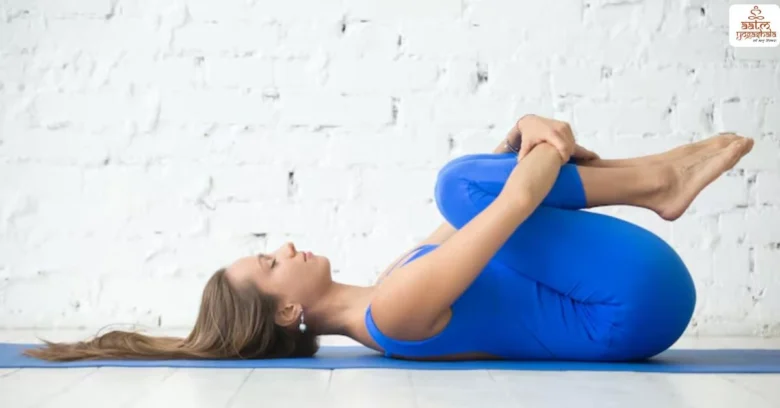
Apana means downward flow of energy in the body that helps to get rid of something and grounded and Asana is pose or posture in Sanskrit. The combination of Apanasana means the Pose of Downward-Moving Energy.
This is a very mildly compressing position of the knees to chest, which is known to relax the nervous system, slow down digestion and aid physical and mental rest. Apanasana (Knees To Chest Pose) is a gentle yoga posture that helps relax the lower back and improve digestion.
Apanasana is based on the traditional Hatha Yoga, in which the joints were warmed up and the mind put at ease through gentle and repetitive motions. The Knees-to-Chest pose has become a staple of most styles of yoga, such as Hatha, Iyengar, Restorative, and Yin Yoga since it is easy, safe, and a very calming position. Teachers tend to practice it either in the beginning or at the end of a lesson to relieve back strain, calm the mind and restore breath-movement contact.
Physically, Apanasana offers mild lower back and spine decompression, which releases tight muscles due to sitting in one position or stress. It is a light workout of the hip flexors and the core, but leaves the shoulders and upper back to sink into the mat. The low pressure in the abdomen can massage the internal organs aiding in digestion and circulation.
When you breathe in and out in this relaxation pose the activity of the parasympathetic nervous system that slows the heart rate and promotes complete rest, which grounds both the mind and the body, occurs automatically in your body. Knees to chest pose apanasana is commonly practiced at the end of a yoga session to release tension in the spine.
What is the Meaning of Apanasana?
Apanasana consists of two words in Sanskrit, apana which means downward moving life force and asana which means pose. Apanasana benefits include better digestion, reduced bloating, and relief from lower back pain.
Apana is among 5 Prana and this means the opposite of prana (upward flowing life force). Prana is a life-giving force, but apana is an eliminating force. It aids in the removal of toxins in the body due to the eliminating nature of this pose, and that is the reason why it is named so.
Apanasana is a wind releasing pose due to the quality of eliminating toxins. Apanasana is used to establish bowel movement in the Vata Dosha body that eliminates the surplus of Apan Vayu. That is the reason Apanasana is also referred to as Pawanmuktasana (gas release pose).
Apanasana (Knees To Chest Pose): How do I do it?
The position will relax and stretch the lower back, hips, and knees. To do this pose:
- Lay on the back with the knees bent, and the feet flat on the floor.
- Bend your knees in towards your chest grasping by the shins or the backs of your thighs.
- Relax your back and head on the floor and maintain the position for 20-30 seconds with deep breathing.
- The pose is released by slowly bending your knees back to the beginning position.
Precautions of Practising Apanasana
The precautions to Apanasana (Knees-to-Chest Pose) are:
- Do not do this pose when you have a recent or chronic back or knee injury.
- The individuals who experience lower back pain and sciatic pain are advised to be cautious in performing this pose and they must consult a medical professional before they start it.
- Pregnant women are also not supposed to do this pose or change it with the help of a blanket or cushion at the lower back.
- Individuals with digestive disorders are not supposed to do this pose or do it in a mild manner and limited time.
Note: This pose should not be over-stretched or strained and you should listen to your body and take no more than is comfortable. Apanasana meaning refers to the “wind-relieving pose,” which supports the downward flow of energy in the body.
Do not forget to take deep breaths and be fully in the position so that the easy stretch can release the tension in the lower back and the hips.
Also Go Through:- Meaning of Ganda Bherundasana?
Apanasana (Knees to Chest Pose) Benefits
Apanasana, besides having a number of advantages, it benefits include:
- Alleviates the digestive tract: This is a posture that can be used to massage the internal organs and alleviate constipation and bloating.
- Lessens stress and anxiety: The pose will alleviate stress and anxiety.
- Relaxes: Apanasana is useful in stretching the back and hip muscles, which relaxes and relieves tension.
- Enhances breathing: Stretching and twisting of spine can be used to enhance breathing by enlarging the lungs and chest.
- Stimulates the immune system: Apanasana aids in stimulating the immune system and enhancing the general health by twisting and compressing the organs of the abdomen.
Modifications & Variations
Knees-to-Chest Pose is suitable to students, both novices, and advanced practitioners. Apanasana contraindications include recent abdominal surgery, severe back injury, or pregnancy without medical guidance. It should be pain free and with minimal pain when done. In case you have to adjust the position to suit yourself better, you can use these few adjustments in order to discover the variation that will suit you best:
- To stretch further, get your nose to your knees in the entire pose.
- When you have a big stomach or a chest, you may not be able to hold your legs between your hands. Rather, wrap each knee a little to the side of your body, to each armpit of the same side. Grab your shins with your hands, rather than your legs right over your breast.
- In case you are still struggling to hold your shins, secure a yoga strap around the soles of feet with bending knees. Use both hands to hold the strap to assist in pulling your knees closer.
Also Go Through:- Child’s Pose (Bālāsana)
Final Thoughts
Wake up fresh and spend your day like you are rejuvenated by doing apanasana on a mattress of the bed or the floor mat. It is also advantageous to be in this position after a long hard day. It is an obligation to do poses to get the fatigue, stress, and toxins out of the body and sleep well.
Frequently Asked Questions
Q. Is Apanasana good for lower back pain?
A. Yes, it is usually prescribed in case of mild lower back pain. The posture stretches and decompresses the lumbar spine. Nevertheless, when you have a herniated disc or bad back, visit a medical expert.
Q. How long should I hold Apanasana?
A. The length of time you can maintain the pose is 30 seconds to 1 minute as you breathe deeply. Other individuals slowly move back and forth in order to work out the lower back.
Q. When is the best time to practice Apanasana?
A. It is ideal:
1. In the morning to aid in digestion.
2. Relaxing the body before going to sleep.
3. Following a yoga experience as a relaxation posture.
4. Do not practice too soon after a fat meal
Q. Can beginners do Apanasana?
A. Yes. Apanasana is suitable for a beginner and is deemed to be one of the safest and most accessible forms of yoga.
Q. Is Apanasana safe during pregnancy?
A. Soft variations can be exercised in early pregnancy under the guidance. Nevertheless, deep abdominal compressions are not advised particularly in late trimesters. Never rely on a prenatal yoga teacher or physician.
Q. What is the difference between Apanasana and Pavanamuktasana?
A. Apanasana is normally a lying down pose with the hugging of both knees to the chest. Pavanamuktasana (Wind-Relieving Pose) can be used with variations of the one leg being hugged at a time. The terms have been used interchangeably in most contemporary yoga classes.
Also Read Post:-