Selecting your first yoga teacher training program feels overwhelming when multiple hour tiers compete for your attention. Choosing the wrong tier wastes both weeks of personal leave and thousands of dollars in travel expenses.
This comparative analysis clarifies the exact curriculum, daily practice demands, certification legitimacy, and career paths for 100-hour, 200-hour, and 300-hour courses. At AATM Yogashala in Rishikesh, we guide hundreds of international applicants annually through this precise decision matrix.
Quick Overview: Key Takeaways
- 100-Hour TTC: Introductory foundation for personal development; does not grant independent teaching credentials under Yoga Alliance guidelines.
- 200-Hour TTC: The foundational, globally mandatory benchmark for becoming a certified teacher (RYT 200). Best choice for most applicants.
- 300-Hour TTC: Advanced master-level training; strictly requires prior completion of an accredited 200-hour program to qualify for RYT 500 status.
What Does a 200-Hour Certification Actually Give You?
Before evaluating whether the training is worth your capital, clarify what the credential actually delivers. Under Yoga Alliance standards, a 200-hour certificate represents the minimum foundational threshold required to instruct public classes, purchase professional liability insurance, and gain employment at commercial yoga studios.
The curriculum is divided into five compulsory educational pillars:
- Techniques, Training, and Practice (100 Hours): Practical instruction in classical Hatha postures, Ashtanga Vinyasa primary series mechanics, pranayama breath control, and daily meditation. Explore our breakdown of different schools of yoga to understand how these styles interlock.
- Teaching Methodology (25 Hours): Vocal projection, hands-on adjustments, student injury management, and class sequencing logic.
- Anatomy and Physiology (20 Hours): Skeletal alignment, joint biomechanics, muscular engagement, contraindications, and autonomic nervous system regulation.
- Yoga Philosophy, Lifestyle, and Ethics (30 Hours): Critical study of Patanjali’s Yoga Sutras, Bhagavad Gita concepts, ethical codes of conduct (Yamas and Niyamas), and the Ayurvedic diet.
- Practicum (25 Hours): Supervised student teaching sessions where you design sequences, lead classes, receive direct critique, and observe peers.
Clinical studies cataloged by the National Institutes of Health show that intensive yoga practice systematically regulates sympathetic tone and reduces musculoskeletal pain markers. However, teaching these principles safely requires an understanding of anatomy and movement mechanics. Rishikesh schools emphasize foundational biomechanics so teachers know how to modify poses for students with spinal pathologies, joint restrictions, or cardiovascular limitations.
Full Financial Cost Breakdown: Rishikesh vs Western Studios
Cost is one of the most compelling arguments for studying in India. Western yoga teacher trainings in cities like London, New York, or Sydney charge premium rates for modular weekend courses. In contrast, Rishikesh schools benefit from favorable local operating economics, passing substantial savings to students.
Here is an itemized breakdown of the true expenses you should plan for when traveling to Rishikesh:
| Expense Category | Rishikesh Ashram Training | Western Weekend Studio Program |
|---|---|---|
| Course Tuition | $750 – $1,250 USD | $3,000 – $4,500 USD |
| Accommodation (24–28 Nights) | Included in ashram tuition | Not included ($1,800 – $3,000 if traveling) |
| Meals (3 Daily Sattvic Meals) | Included in ashram tuition | Self-funded ($600 – $1,000) |
| International Flights | $650 – $1,200 USD (round-trip) | $0 – $300 USD (local transit) |
| Indian Tourist Visa | $25 – $40 USD | $0 USD |
| Airport Taxi Transfer (DEL to Rishikesh) | $40 – $60 USD | $0 USD |
| Yoga Alliance Registration | $115 USD (direct application) | $115 USD |
| Estimated Total Investment | $1,580 – $2,665 USD | $3,715 – $5,915 USD |
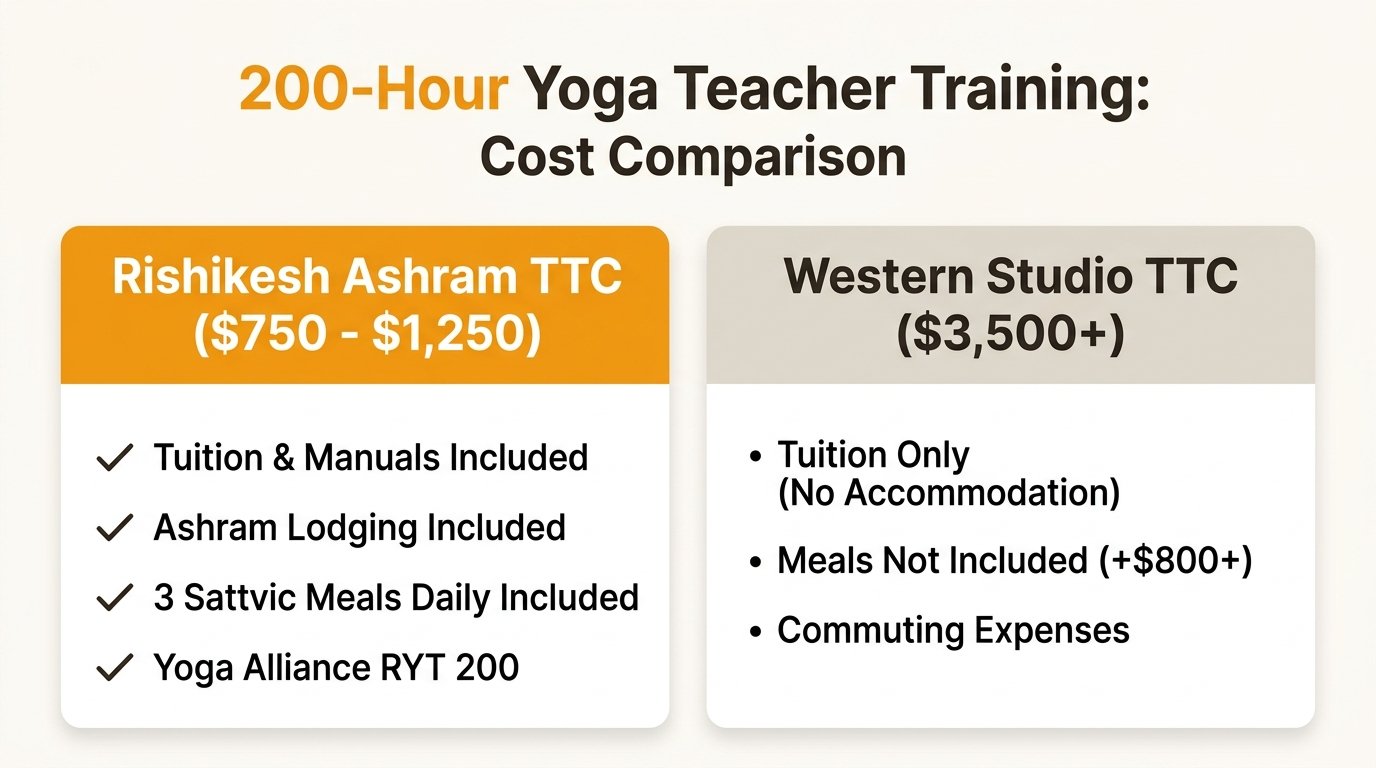
Even after paying for international flights, an entry visa, and local transport, an immersive training in Rishikesh costs roughly half the total price of a Western program. More importantly, that investment covers a month of living costs, allowing you to completely disconnect from daily rent, utility bills, and grocery expenses back home.
Rishikesh Immersion vs Western Weekend Formats
The financial calculation is straightforward, but the pedagogical difference is where the true value lies.
Western weekend courses stretch 200 hours across six to nine months. You attend classes on Saturdays and Sundays, return to your regular corporate desk job on Monday, and fight to maintain personal practice momentum throughout the workweek. Distractions from family, relationships, and work obligations constantly interrupt your learning process.
In Rishikesh, you live inside an educational ashram. Every hour of your day is oriented around yogic discipline. You wake up with your peers, eat nourishing food designed to support digestion, analyze postures in the studio, and fall asleep early without the distraction of modern nightlife. This continuous immersion accelerates muscle memory, vocal confidence, and internal philosophical understanding at a rate that broken weekend workshops cannot match.
If you are comparing different course durations before booking, evaluate our comparative guide on 100-hour vs 200-hour vs 300-hour yoga teacher training, or explore our advanced post-graduate 300-hour yoga teacher training in Rishikesh.
What a Real Day in Rishikesh Looks Like
Many students arrive expecting a leisurely retreat atmosphere. The reality is physically demanding and mentally rigorous. At AATM Yogashala, our daily schedule reflects the traditional ashram routine necessary to complete two hundred certified educational hours:
- 05:30 AM – Morning Wake-Up: The morning ashram bell rings. Students cleanse using Jala Neti saline irrigation to prepare the respiratory tract for breathing exercises.
- 06:00 AM to 07:30 AM – Pranayama & Meditation: Systematic training in classical breathing techniques including Kapalabhati, Bhastrika, and Nadi Shodhana, followed by guided mental concentration (Dharana). Check our guide to meditation yoga poses for posture alignment during seated practice.
- 07:45 AM to 09:15 AM – Traditional Hatha Yoga: Focus on foundational alignment, joint stabilization, and progressive posture holding.
- 09:30 AM – Sattvic Breakfast: Fresh fruit, porridge, herbal teas, and traditional vegetarian Indian breakfast items designed for light digestion.
- 10:30 AM to 12:00 PM – Yoga Philosophy & Lifestyle: Textual analysis of the Yoga Sutras of Patanjali, exploring ethical restraints (Yama), daily observances (Niyama), and overcoming mental fluctuations (Chitta Vritti).
- 12:15 PM to 01:15 PM – Yoga Anatomy & Biomechanics: Musculoskeletal analysis, spine mechanics, movement planes, and structural injury prevention led by anatomy instructors.
- 01:30 PM – Sattvic Lunch: Balanced vegetarian meal containing lentils (dal), seasonal vegetables, brown rice, and fresh chapatis.
- 02:00 PM to 03:30 PM – Rest & Self-Study: Essential physical recovery time, reading manuals, and sequence preparation.
- 03:45 PM to 05:00 PM – Teaching Methodology & Adjustments: Hands-on clinic where students deconstruct asanas, practice physical modifications, and develop concise instructional cueing.
- 05:15 PM to 06:45 PM – Ashtanga Vinyasa Flow: Dynamic, breath-synchronized sequence testing cardiovascular stamina and balance.
- 07:00 PM to 08:00 PM – Kirtan, Chanting, or Evening Meditation: Sound resonance, mantra recitation, and mental relaxation.
- 08:15 PM – Sattvic Dinner: Light evening meal to prepare the digestive tract for sound sleep.
- 09:30 PM – Mandatory Quiet Hours & Lights Out: Deep rest to allow muscular and neural recovery.
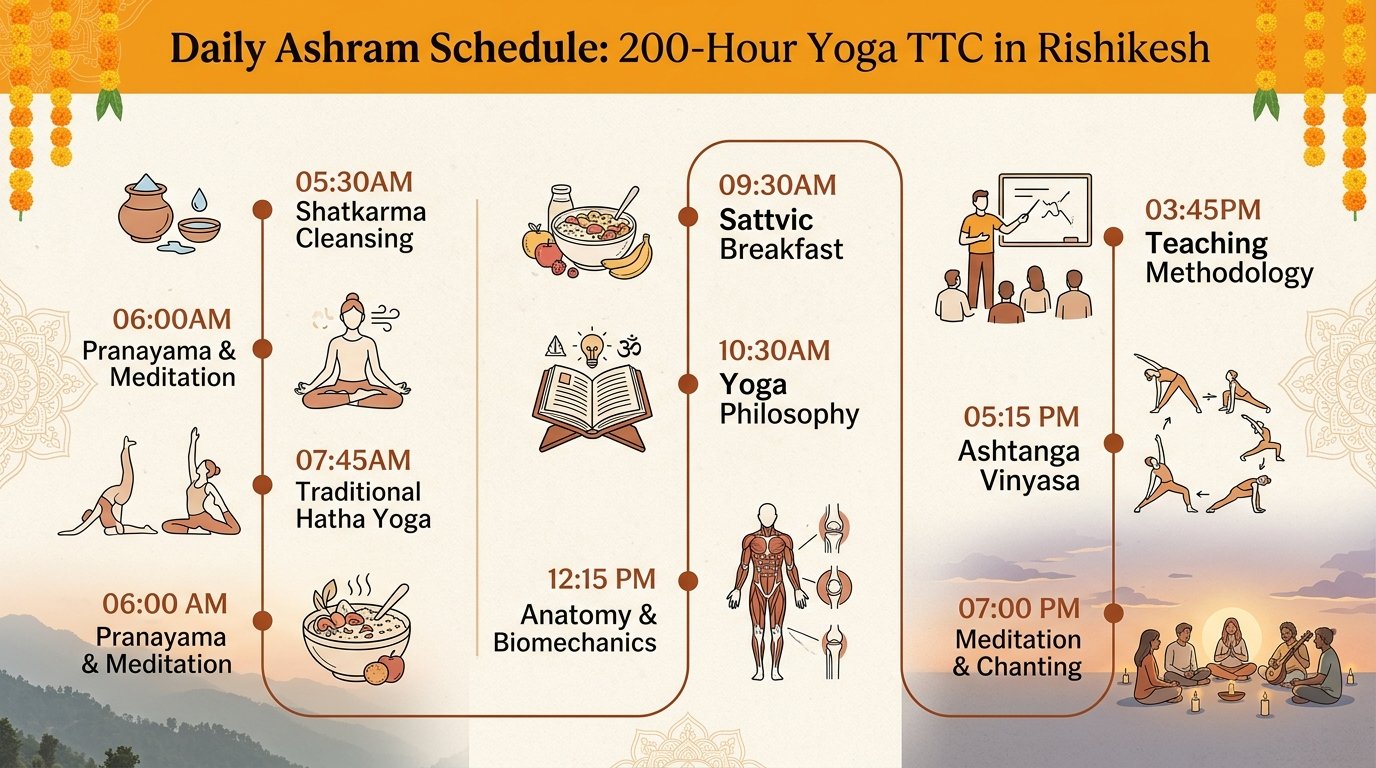
Maintaining this rhythm six days a week produces profound physical strength and mental endurance, but it demands sincere personal dedication.
4 Honest Realities Nobody Tells You Before Booking
To provide a truly honest assessment, we must address the difficult aspects of ashram training that marketing brochures routinely gloss over.
1. Severe Physical Soreness in Week One and Two
Practicing four to five hours of physical asana every day places unfamiliar loads on your hamstrings, shoulders, and hip adductors. Even intermediate practitioners experience intense muscular fatigue during the initial ten days. Proper hydration, magnesium supplementation, and active recovery during rest periods are necessary to avoid strain.
2. Digestive Recalibration
Traveling to India involves adapting to new water sources and food preparation methods. Even though our ashram kitchen adheres to rigorous hygiene standards with filtered water and freshly cooked meals, your gut microbiome will undergo an adjustment period. Packing electrolytes, digestive enzymes, and standard travel remedies is sensible preparation.
3. Mental Resistance to Ashram Discipline
Living without alcohol, tobacco, non-vegetarian food, and late-night socializing can provoke initial frustration. You will share common spaces, follow a rigid daily timetable, and surrender personal independence to the schedule. Those who accept this discipline experience clarity, but those who resist it struggle mentally.
4. Imposter Syndrome During Practicums
Standing in front of a class to deliver cues, correct alignments, and manage thirty eyes watching your every move can be nerve-wracking. Every new trainee experiences moments of self-doubt during week three teaching assessments. This discomfort is precisely where instructional competence is built.
Who Is Rishikesh 200-Hour YTT Worth It For?
A foundational training course in Rishikesh is exceptionally rewarding for three specific groups:
- Aspiring Professional Instructors: If you intend to instruct classes in commercial gyms, studios, or private settings, the rigor, adjustment practice, and recognized RYT 200 credentials give you a legitimate launchpad.
- Practitioners Seeking Personal Depth: If you have practiced yoga for years but feel stuck at a superficial level, a month-long immersion deepens your philosophy, breathwork, and alignment far beyond standard drop-in classes.
- Individuals Craving a Digital and Lifestyle Reset: If modern desk routines, chronic screen fatigue, and urban stress have left you drained, a disciplined ashram routine on the banks of the Ganges provides a grounded physical and mental reset.
Who Should NOT Enroll in a 200-Hour Course?
Being honest about who this program is not for protects students from making a costly mistake:
- Holiday Seekers Wanting a Leisure Spa: If you want late-morning sleep-ins, poolside cocktails, and casual tourist excursions, book a boutique wellness resort instead. You will resent the 5:30 AM wake-up bell.
- Individuals with Unmanaged Acute Injuries: While training teaches therapeutic modifications, arriving with acute herniated discs or torn ligaments will prevent you from participating in mandatory practical modules.
- Complete Beginners with Zero Prior Yoga Experience: While you do not need advanced contortionist flexibility, having at least three to six months of consistent yoga practice ensures your joints and muscles can handle the daily physical volume.
Frequently Asked Questions (FAQ)
1. Is a 200-hour yoga certification in Rishikesh recognized internationally?
Yes. As long as you graduate from a registered school like AATM Yogashala, your certificate qualifies you to register with Yoga Alliance as an RYT 200 (Registered Yoga Teacher). This credential is the universal standard recognized by commercial studios, fitness facilities, and personal trainer insurance brokers across North America, Europe, Australia, and Asia.
2. Can I teach yoga immediately after completing the 200-hour course?
Yes. A foundational 200-hour program is designed specifically to qualify you for beginner and intermediate class instruction. You will know how to sequence balanced 60-minute and 90-minute classes, give safe verbal cues, offer hands-on adjustments, and modify postures for common mobility restrictions.
3. How much spending money do I need in Rishikesh outside of tuition?
Because lodging and three meals are covered in your ashram package, incidental expenses are modest. Budget approximately $150 to $250 USD total for the entire month to cover bottled drinking water, local tuk-tuk transit, laundry service, temple entry fees, and personal souvenirs like singing bowls or mala beads.
4. What style of yoga will I study during the 200-hour training?
Our program at AATM Yogashala provides a multi-style syllabus grounded in classical Hatha Yoga and Ashtanga Vinyasa. Hatha classes build steady alignment, anatomical precision, and breath awareness, while Ashtanga Vinyasa sessions develop stamina, rhythmic movement transitions, and mental focus.
5. Do I need to be flexible to join a 200-hour training?
No. Skeletal architecture and personal flexibility vary across every individual body. The purpose of teacher training is to understand joint mechanics, postural alignment, and prop utilization, not to demonstrate acrobatic postures. An open attitude and consistent effort matter far more than how far you can bend.
6. Is Rishikesh safe for solo female travelers?
Rishikesh is widely recognized as one of the safest towns in India for international travelers. The community is centered around spiritual learning, ashrams, and academic study. Millions of solo female students travel here every year. Practicing common-sense travel precautions and coordinating airport pickups directly through the school ensures a safe experience.
7. What happens if I miss a lecture due to illness?
If you fall ill during the course, our team arranges physician consultations, recovery meals, and rest. You are assigned compensatory hours with instructors to make up missed syllabus topics, ensuring you fulfill the mandatory 200 contact hours before graduation.
8. What is the weather like in Rishikesh throughout the year?
The ideal training seasons run from September through April, featuring warm sunny days and cool Himalayan evenings. May and June are warmer summer months, while July and August bring the monsoon rains, offering lush green landscapes and fewer tourist crowds.
Take the Next Step Toward Your Teaching Journey
Investing in a 200-hour yoga teacher training in Rishikesh is one of the most rewarding commitments you can make for your physical practice and professional teaching career. It challenges your physical boundaries, grounds your understanding of authentic Vedic philosophy, and connects you with a dedicated international community of teachers.
If you are ready to immerse yourself in classical yoga education along the banks of the sacred Ganges:
- Explore our complete syllabus, daily schedules, and upcoming dates for the 200-Hour Yoga Teacher Training in Rishikesh.
- Review batch availability and submit your course reservation form to secure your residential seat.
- Have specific questions regarding room options, dietary needs, or syllabus prerequisites? Contact our admissions team for direct personal assistance.