
Most people in India are involved in desk jobs. People used to sit for long hours in a hunched position in one place just to complete their task. Shoulders round forward, the chest collapses inward. Over time, that posture becomes the default, and the muscles along the upper back and rib cage tighten to match it.
Heart opening poses in yoga for every person play a role in working on their posture, body, and mind. It reflects on their calmness, sharpness, and the confidence they gain by doing yoga. Heart Opening Yoga Poses for Beginners work directly against that pattern, stretching the chest, shoulders, and the muscles around the spine that are rarely targeted in any other form of exercise.
Here is a complete guide for people who want to take benefit from yoga by doing poses just for 30 minutes a day. Simple poses and small changes can completely transform the rest of your life.
What is “Heart-Opening” Yoga?
Heart opener stretches the anterior chain: the pectorals, anterior deltoids, intercostals, and hip flexors when the spine extends. The yoga poses for heart opening come from the physical direction of sequential movement, as the chest lifts and opens toward the sky, rather than from anything metaphysical.
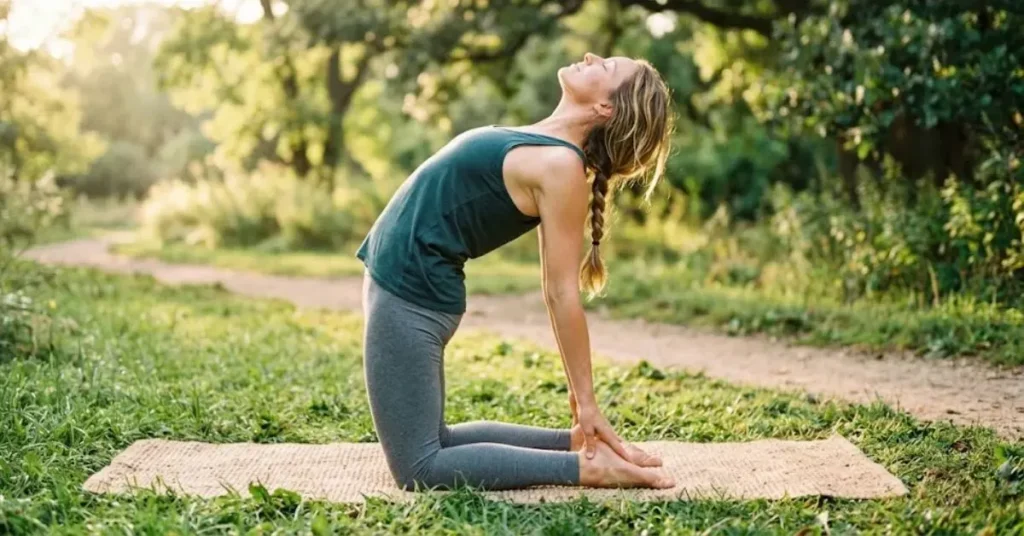
Yoga for the chest requires a stable core. If your abdomen is completely passive during backbends, the compression moves into the lumbar spine rather than distributing across the thorax. Lightly engage your lower belly throughout every pose.
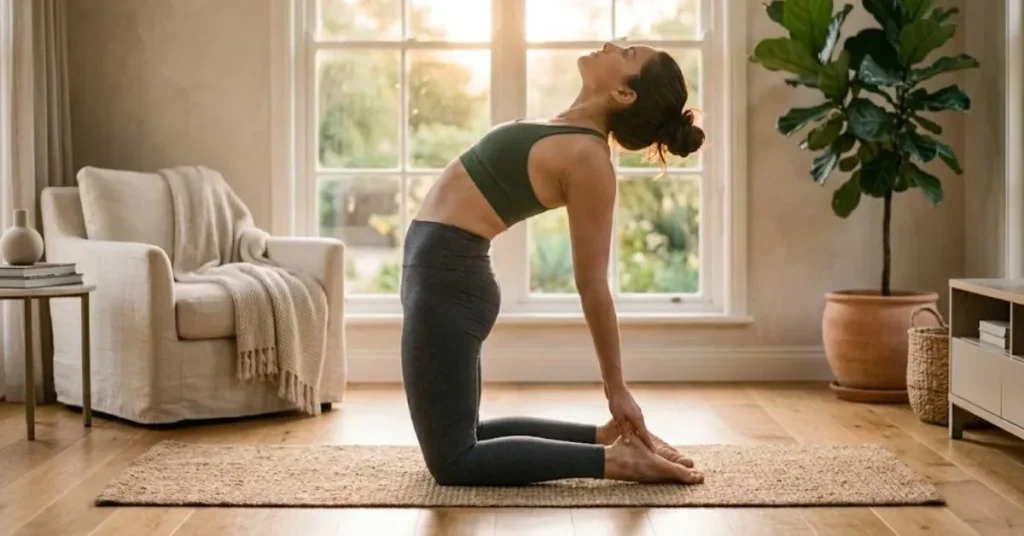
Yoga poses fall into three broad categories: gentle backbends like bridge and fish, active openers like camel and wheel, and passive openers like supported fish using a bolster or folded blanket. Beginners start with the first two categories. Wheel Pose can wait.
The poses can fix your posture and affect your body reflexes. The flexibility you can achieve by doing the yoga poses daily, just for 30 minutes. It enriches your body with fresh oxygen, and you start feeling fresh. It also calms your mind and controls stress hormones.
The 7 Best Heart Opening Yoga Poses for Beginners
Here is a guide to different types of yoga poses that are beneficial for your health:-
1. Cat-Cow (Marjaryasana-Bitilasana)
Position yourself on all fours, ensuring your wrists are positioned below your shoulders, and your knees below your hips. During inhalation, gently relax your abdomen, elevate your chest and tailbone, and allow your back to arch (cow pose).
On an exhale, round your spine toward the ceiling, and tuck your chin and tailbone (cat). Move slowly and complete 8 to 10 rounds. This is one of the gentlest chest-opening yoga poses. It warms the spine before you ask it to do anything harder.
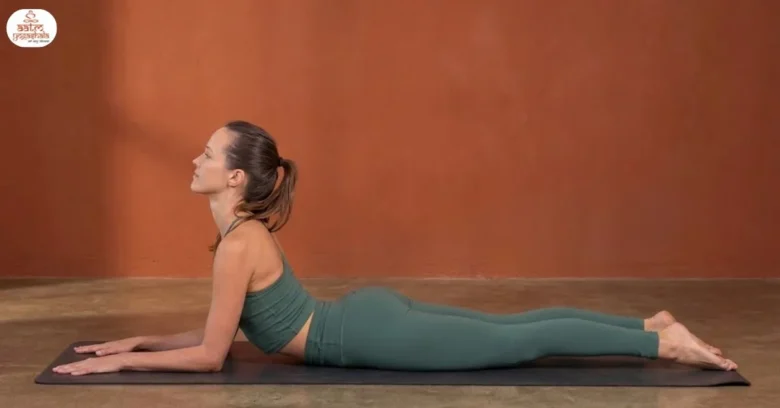
2. Sphinx Pose (Salamba Bhujangasana)
Lie down on your yoga mat and face downwards. Place your forearms on the floor, elbows under your shoulders. On an inhale, press your forearms down and lift your chest off the mat. Keep your legs active and your lower belly lightly engaged. Hold for 5 to 8 breaths.
Sphinx is a controlled backbend. It strengthens the erector spinae while stretching the chest and abdomen, which makes it one of the safest heart-opening poses in yoga for anyone with lower back sensitivity.
3. Cobra Pose (Bhujangasana)
From the same face-down position, place your hands under your shoulders. On an inhale, press through your palms and lift your chest. Keep your elbows slightly bent; don’t lock them. Your pelvis stays on the floor.
This is a step up from Sphinx. Most beginners do it too aggressively, cranking their neck back and compressing the lumbar spine. Lift only as high as you feel comfortable, with zero strain in the lower back. That might be two inches off the mat. That’s fine.
4. Bridge Pose (Setu Bandhasana)
Lie on your back. Relax your body and bend your knees and keep your feet on the floor. Press your feet into the floor, then lift your hips. Place your hands under your back for support. Slowly roll onto the edges of your shoulders.
The bridge is one of the most practical Heart Opening Yoga Poses for Beginners because it strengthens the glutes and hamstrings while opening the chest and hip flexors at the same time. Hold for 5 breaths, lower slowly, and repeat twice.
5. Low Lunge with a Backbend (Anjaneyasana)
Step your foot forward into a lunge position. Lower your knee to touch the floor. When you breathe in, raise your arms up high. Lean back a bit. This will help open up your chest to look up at the ceiling. Stay like this for 5 breaths. Then switch to the side.
This pose addresses the hip flexors, which are tight in most people who sit all day. When the hip flexors are tight, they pull the pelvis into an anterior tilt, which in turn exaggerates the lower back curve. An open heart yoga sequence that includes low lunge works on the root of the posture problem, not just the symptom.
6. Fish Pose (Matsyasana)
Lie on your back. Place both your hands down, under your waist. On an inhale, press through your forearms and lift your chest. Let the top of your head rest lightly on the floor (or hover if that’s uncomfortable). Hold for 5 breaths. Fish pose is a more intense heart-opening yoga pose because it extends the thoracic spine and involves the neck. Go slowly, if you feel any pinching at the back of your neck, come out.
7. Supported Fish with a Bolster
Not every heart opener needs to be active. Place a rolled blanket or yoga bolster across your mid-back, lie back over it, and let your arms open to the sides. Stay for 2 to 3 minutes. Passive chest-opener yoga like this is where real muscular release happens. The nervous system needs time, usually more than five breaths, to let go of deep tension in the pectoral fascia. This is the one pose most beginners skip, and most experienced practitioners wish they’d started earlier.
Read Also:- 200 Hour Yoga Teacher Training Course in Rishikesh
Conclusion
The benefits of heart opening yoga poses go beyond posture. Regular chest-opening practice has been linked to improved respiratory function, since expanded chest volume allows fuller diaphragmatic breathing. Yoga poses for better posture also reduce compression on the discs of the cervical spine.
When the head sits forward of the shoulders, each inch of forward head posture adds roughly 10 pounds of effective load on the neck. Pulling the head back to neutral, which chest opener yoga helps with over time, removes that load. This is not a quick fix. Six weeks is the minimum. Six months is more realistic for lasting change.
Quick Answers
Q. How often should I practice Heart Opening Yoga Poses for Beginners?
A. Three times a week is a beneficial starting point. Daily practice is fine if you’re doing gentle versions like Sphinx or Supported Fish. More intense backbends, like camels, need at least one rest day between sessions to let the muscles recover.
Q. Are yoga poses for heart opening safe if I have lower back pain?
A. Many of them are, with modifications. Sphinx and Bridge are generally well-tolerated. Deeper backbends like Cobra and Fish need care. If your pain is active or diagnosed, work with a yoga therapist rather than a group class instructor.
Q. Can heart-opening poses in yoga help with anxiety?
A. There’s reasonable evidence that they help. Backbends activate the sympathetic nervous system briefly during the pose, and the parasympathetic rebound after the pose (especially in Supported Fish) produces a calming effect. They’re not a treatment for anxiety disorders, but many practitioners report feeling noticeably calmer after a chest-opening session.
Q. Do I need any props for an open heart yoga sequence?
A. Not to start. A yoga mat is enough for Cat-Cow, Sphinx, Cobra, Bridge, and Low Lunge. A folded blanket or firm pillow works for Supported Fish. A proper bolster is worth buying once you’re practicing consistently, as passive openers with good support are more effective than improvised versions.
Read More on Yoga Practice:-